
Physical AI Is Getting Institutional Capital. Here Is What That Means for Field Service Operators.
London based seed investor Seedcamp recently announced a $320 million raise across two new vehicles, and buried in the announcement was a signal worth paying attention to if you run a trade contracting or field service business: physical AI is now a declared investment priority for the fund.
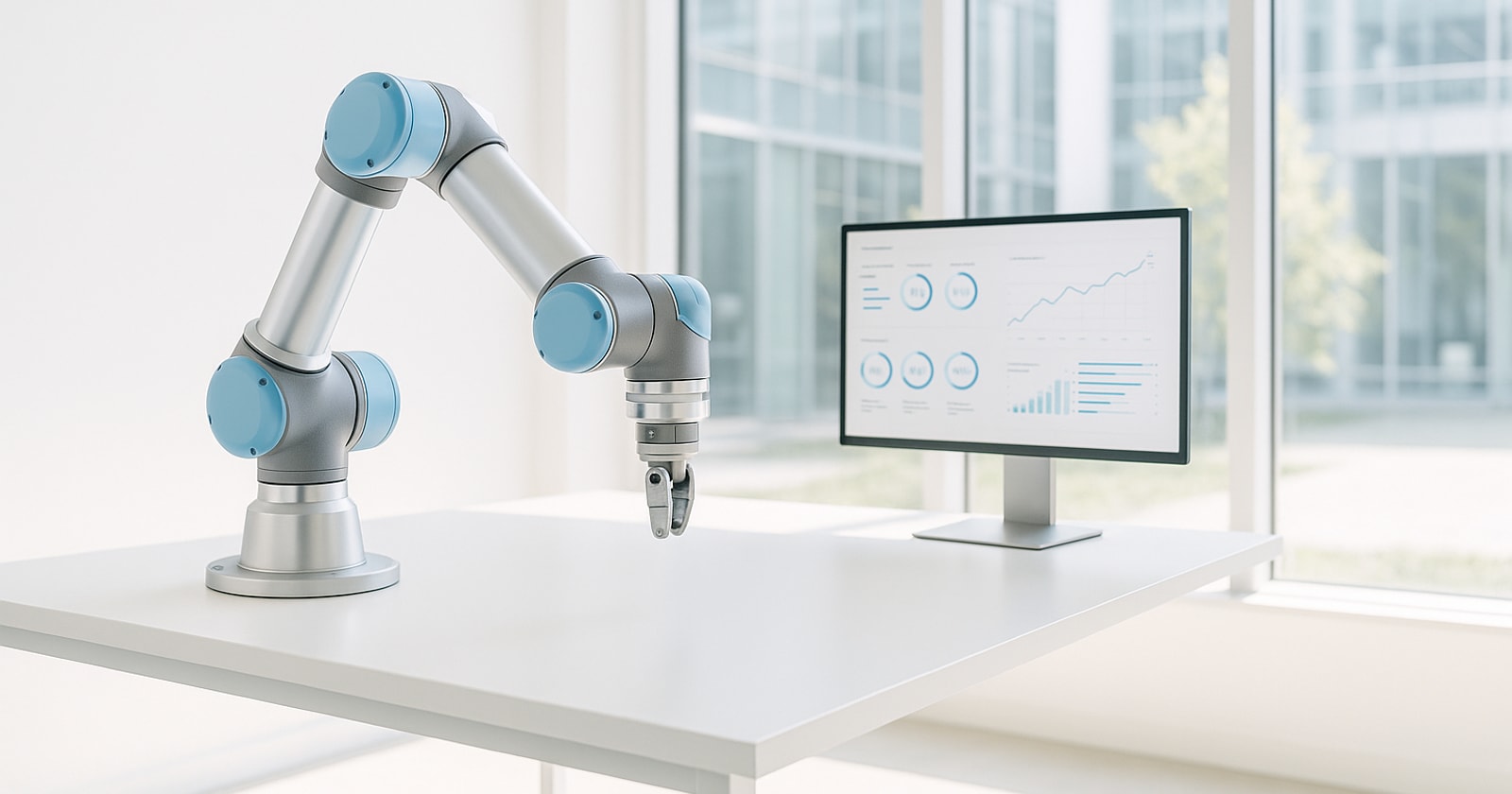
Physical AI, as Seedcamp frames it, is technology that acts on the real world rather than purely in software. Automation, robotics, and intelligent systems that perceive, decide, and do things in physical environments. That is a different category from the chatbots and document summarizers that have dominated the AI conversation for the past few years. And it points directly at the layer where field service and contractor operations actually live.
What "Physical AI" Actually Means (and Why It Is Not Just a Buzzword)
Software only AI improves information work. It drafts emails, scores leads, summarizes documents. Useful, but contained to screens.
Physical AI improves the work that happens when a person drives to a site, diagnoses a system, installs equipment, changes scope, and documents what they did. That is the work that trade contractors do every day, and it is also the work that has historically been hardest to automate because it is nonlinear, unpredictable, and spread across dozens of handoffs.
When institutional capital at the scale of $320 million moves toward this category, it is not a bet on a distant future. It is a recognition that the tooling infrastructure to support this shift is either here or close enough that smart investors are backing it now.
For a field service or project based contractor in the GTA or anywhere in Ontario, that matters because the operational problems you are solving today, dispatch conflicts, unbilled change orders, margin leakage on projects, disconnected workforce data, are exactly the problems that physical AI adjacent platforms are being built to address.
The Operational Gap That Capital Is Now Chasing
Let's be specific about where the gap actually is, because "AI for field service" can mean almost anything.
The handoff problem
Most trade contractors with 20 to 300 employees are running on a collection of point tools: a CRM that does not talk to dispatch, a project tool that does not talk to invoicing, timesheets that sit in a spreadsheet until someone keys them into payroll. The "integration" between those tools is a human being re entering data and chasing approvals.
That human middleware is where margin goes to die. A change order gets approved verbally on site and never billed. A permit expiry gets missed because no one owns the reminder. A crew gets double booked because the dispatch board is not connected to the project schedule. None of these failures are dramatic. They accumulate quietly, and you see them at the end of the month when project margin is lower than the estimate and no one can explain exactly why.
Where intelligent automation fits
The Seedcamp thesis is that AI is ready to operate in this physical world layer, not just on the screen, but in the systems that coordinate what happens on the ground. For a contractor, that shows up in a few specific places:
Intake and scheduling. AI agents that handle after hours calls, qualify the job, and book a technician without a dispatcher having to interrupt their workflow. This is not science fiction. AI receptionist and scheduling agents exist today and are being embedded into field service platforms.
Quote to field continuity. When a quote becomes a work order, the information should flow without re entry. Scope, materials, crew requirements, permit needs. The intelligence is not just in generating the quote; it is in keeping the downstream workflow accurate when scope changes.
Field to invoice continuity. When a work order closes in the field, the invoice data should be ready for review without a back office person rebuilding it from field notes and timesheet exports. The value of physical AI here is not speed for its own sake; it is accuracy. Billable hours and materials that actually made it to the invoice.
Change order discipline. On project work, change orders are where margin is won or lost. An intelligent system that flags scope additions in real time, routes them for approval, and keeps them attached to the project record is not a luxury. It is what separates an 18% margin job from a 9% margin job.
A Simple Framework for Thinking About Your Own Readiness
Not every contractor needs to act on a Seedcamp investment thesis. But the underlying question it surfaces is worth asking about your own operation: where in your workflow does information stop flowing automatically and start requiring a human to carry it?
Walk through this sequence and mark where the handoff breaks:
- Customer inquiry comes in (call, email, web form). Does it land in one place, or does someone have to re enter it somewhere?
- Quote is generated. When it is approved, does the work order build itself from the quote data, or does someone recreate it?
- Job is dispatched. Does the field crew see the full scope, site notes, and materials list from the original quote, or do they get a stripped down work order?
- Scope changes on site. Is there a formal change order process, or does the tech call the office and someone scribbles a note?
- Work is completed. Do time and materials flow directly to an invoice draft, or does someone in accounting reconstruct it from multiple sources?
- Invoice is sent and collected. Is there visibility into what is outstanding, or does the controller have to pull an aging report from QuickBooks and cross reference it manually?
If you have a clean, automated handoff at every one of those steps, you are already operating at the level that institutional capital is now betting on. If you have three or four manual handoffs in that chain, you are paying for them in margin and labor every month, even if you cannot see the line item.
What This Means Practically for Contractors Right Now
The Seedcamp raise is not something you need to act on directly. But it is a useful signal about where the industry is heading, and it gives you a framework for evaluating the platforms you are considering or already using.
The question to ask any field service or project operations platform is not "does it use AI?" It is: "Does it maintain operational truth across the whole workflow, from intake through invoice, without requiring a human to carry information between steps?"
That is the shift physical AI represents. Not a smarter chatbot on top of the same disconnected tools. A connected execution layer where the work that happens in the field drives the record automatically, and intelligent automation handles the coordination tasks that currently fall on your ops team.
PolarPath is built around that principle: one platform from customer intake through quote, field execution, project management, invoicing, and workforce, working alongside QuickBooks rather than replacing it. The operational execution layer is where the business events actually happen, and keeping that layer coherent is what prevents the margin leakage that disconnected tools produce.
The Takeaway
Seedcamp's $320 million move toward physical AI is a clear signal that the gap between "software that helps you think" and "software that helps you operate" is closing fast. For trade and field service contractors, that gap has always been the expensive one.
The practical question for your business is not whether AI is coming to field operations. It is whether your current platform is built to connect the handoffs where you are currently losing billable work, or whether it is one more point tool in a chain that still depends on humans to hold it together.
Start with the six step workflow audit above. The breaks in that chain are the ones worth fixing first, regardless of what any investor backs next.