

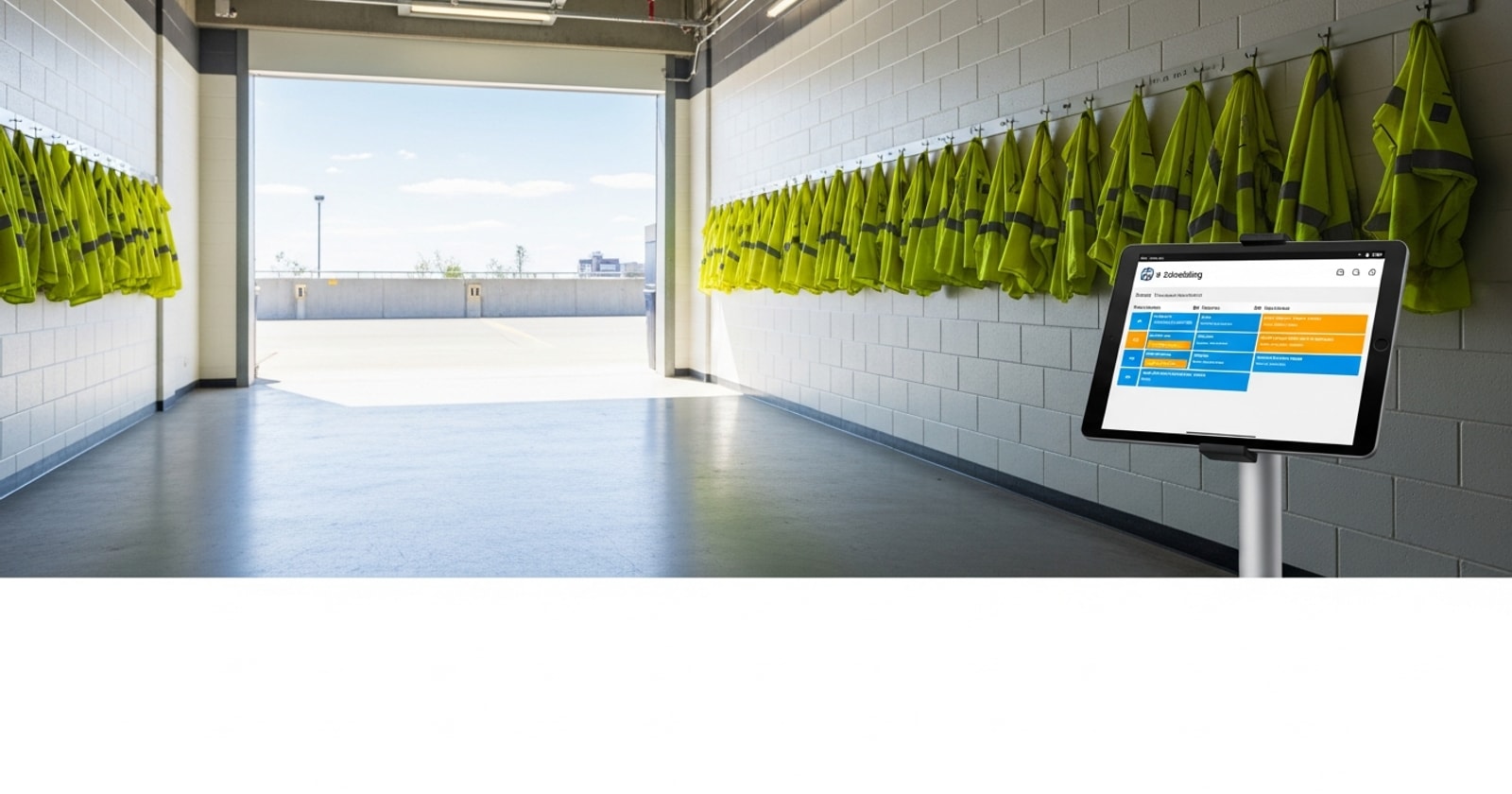
The cameras will follow the ball. They always do. But the next time you watch a match in Toronto this summer, spare a thought for the crew that re torqued the HVAC units at 3 a.m., the electricians who cleared a fault in a service tunnel two hours before kickoff, and the facilities team cycling through a checklist of work orders that reset the venue from one event to the next. None of them will appear on the broadcast. All of them are the reason the stadium works.
The 2026 FIFA World Cup, co hosted by Canada, the United States, and Mexico across June and July 2026, is one of the largest coordinated logistics efforts on the planet. Toronto is one of the official Canadian host cities, hosting matches at its downtown stadium. The soccer is the spectacle. The field operations are the spine.
What "Operations at Scale" Actually Means
People throw that phrase around loosely. Here is what it looks like in practice at a tournament of this size.
A major international venue during a World Cup is not running a single event. It is running dozens of interlocking operational tracks simultaneously: venue setup, equipment inspection, preventive maintenance windows, reactive service calls, security patrols, transit coordination, hospitality restocking, and the teardown reset cycle between matches. Every one of those tracks generates work orders, schedules, crew assignments, and sign offs, and every one of them has a hard deadline measured in hours, not days.
The operational reality is not very different in structure from what a busy HVAC or mechanical contractor in Toronto faces on a large commercial project: multiple active crews, tight interdependencies, client expectations measured in real time, and a back office that needs to know what happened in the field within hours so invoices, change orders, and compliance records stay current.
The difference is scale and visibility. A tournament host city can afford to hire an army of coordinators. Most field service businesses cannot.
The Unsung Tech Stack Behind the Spectacle
Large scale events like the World Cup run on the same category of technology that powers a well run field service business. The tools have different brand names and price tags, but the operational problems they solve are identical.
1. Real Time Dispatch and Smart Scheduling
When a fault surfaces inside a venue two hours before tens of thousands of fans arrive, someone needs to know about it immediately, the right crew needs to be closest and available, and the dispatch decision needs to happen in seconds, not after three phone calls and a text chain.
This is the core promise of smart scheduling and AI assisted dispatch: match the work order to the right technician based on proximity, skill set, and current workload, and surface that match without a coordinator having to hold the entire board in their head.
For a Toronto HVAC or electrical contractor managing a mixed book of reactive service calls and planned project work, the problem is exactly the same. A priority call comes in at 10 a.m. when your two senior technicians are already mid job across town. Who do you pull? What does that do to the afternoon's schedule? Manual dispatching at this decision frequency is a tax on your best people's time.
2. Mobile Work Orders That Close the Loop
Field technicians at a major venue do not carry paper. They work from a device, close a task, capture the outcome, and the record updates in real time. The next crew member who touches that asset sees an accurate history before they start.
In field service contracting, this is still not universal. Technicians complete work, notes live in a van or a text message, and the office is reconstructing what happened a day later to build an invoice. That gap, between the work being done and the record being created, is where unbilled time, missed change orders, and compliance gaps accumulate.
Mobile field execution is not a luxury feature. It is the mechanism that connects the field to the back office in real time, which is what makes accurate, timely invoicing possible.
3. Permit and Compliance Tracking That Does Not Slip
A venue running continuous operations across a summer tournament cannot let a permit expire mid event. The same is true for a mechanical contractor managing a commercial facilities account. Permit expiry, equipment certification, and technician compliance credentials have to be tracked against actual calendar dates, with enough lead time to act.
Relying on someone to remember this, or on a spreadsheet with a "review by" column that nobody opens, is the kind of quiet risk that only becomes visible when it is too late.
4. Cross Functional Visibility for Operations Leaders
The most underrated capability in any large scale operation is a single view that shows what is open, what is overdue, what is at risk, and what has been completed, without requiring a status meeting to assemble.
At the tournament level, operations directors need this across hundreds of concurrent work streams. At the contractor level, an owner or GM needs it across a book of service calls and active projects, so that the change order that was never billed and the permit that expired last week do not have to be discovered the hard way.
What Toronto Contractors Can Take from This
Toronto is not just a host city this summer. It is a live classroom for what field operations look like when the margin for error is zero and the scheduling density is extreme. Watch how the city manages the logistics surge: how crews are deployed across venues and transit corridors, how reactive calls are balanced against planned maintenance windows, how real time information gets to the right people fast enough to matter.
Then come back to your own operation and ask three questions:
-
How long does it take for a completed work order in the field to become an accurate record in the office? If the answer is more than a few hours, you have a gap between operational reality and your books.
-
When a priority service call comes in, how many people and how many tool switches does it take to dispatch the right technician? If the answer involves a phone chain and a spreadsheet check, your dispatch overhead is higher than it needs to be.
-
Can your operations lead see, right now, which jobs are at risk of a margin problem, which change orders are unbilled, and which permits are expiring in the next 30 days? If not, those problems exist; they are just not visible yet.
These are not hypothetical questions. They are the exact operational gaps that field service businesses in the 20 to 300 employee range hit when they have outgrown founder led coordination but have not yet consolidated their tools into a continuous workflow.
The Operation Is the Product
The World Cup will be remembered for the goals, the upsets, and the noise inside a packed Toronto stadium on a summer evening. That is as it should be.
But the operations professionals who keep the lights on, the air flowing, and the crews coordinated deserve a different kind of acknowledgment: the kind that comes from recognizing that the work they do is skilled, complex, and genuinely hard to do well at scale.
The same is true for every HVAC contractor managing a busy summer service season, every electrical team juggling reactive calls alongside a commercial fit out, every facilities manager keeping a portfolio of buildings running while a crew shortage and a permit backlog pile up in parallel.
The tools that make large scale operations possible, mobile work orders, smart dispatch, real time field to office visibility, continuous workflow from quote to invoice, are not reserved for events with global audiences. They are available to the Toronto contractor who has simply decided that the human middleware of re keying data and chasing handoffs is costing more than it should.
PolarPath is built for exactly that operator: one platform for the whole workflow, field service and projects together, working alongside QuickBooks rather than replacing it. No reinventing your accounting stack. Just closing the gap between what your crews do in the field and what your books reflect by the end of the day.
Toronto is hosting one of the biggest field operations showcases on earth this summer. It is a good moment to think about what your own operation would look like if it ran at that standard.
See how PolarPath fits your shop at polarpath.ca, or book a walkthrough with the team.