

Most contractors know the feeling: you look at your workflow and realize that a quote was never followed up, a change order was never billed, a permit expired quietly, or a crew showed up to a job that dispatch had already moved. None of those things failed because your people are incompetent. They failed because the information lived in different places and nobody owned the handoff.
That friction has a name in software circles: "middleware." Not the technical kind, but the human kind. The coordinators, spreadsheets, and frantic phone calls that exist solely to move data from one tool to another. It is the most expensive line item on your P&L that never appears on a report.
This week, a story out of the defense tech world put a sharp frame around that problem in a way that is worth sitting with.
What Neros Technologies Just Did, and Why It Matters Beyond Defense
On August 11, 2026, PR Newswire reported that Neros Technologies, a Torrance, California based defense drone company, closed a $250 million Series C co led by Sequoia Capital and the American Strategic Technology Fund. The round tripled Neros's valuation to $2.5 billion.
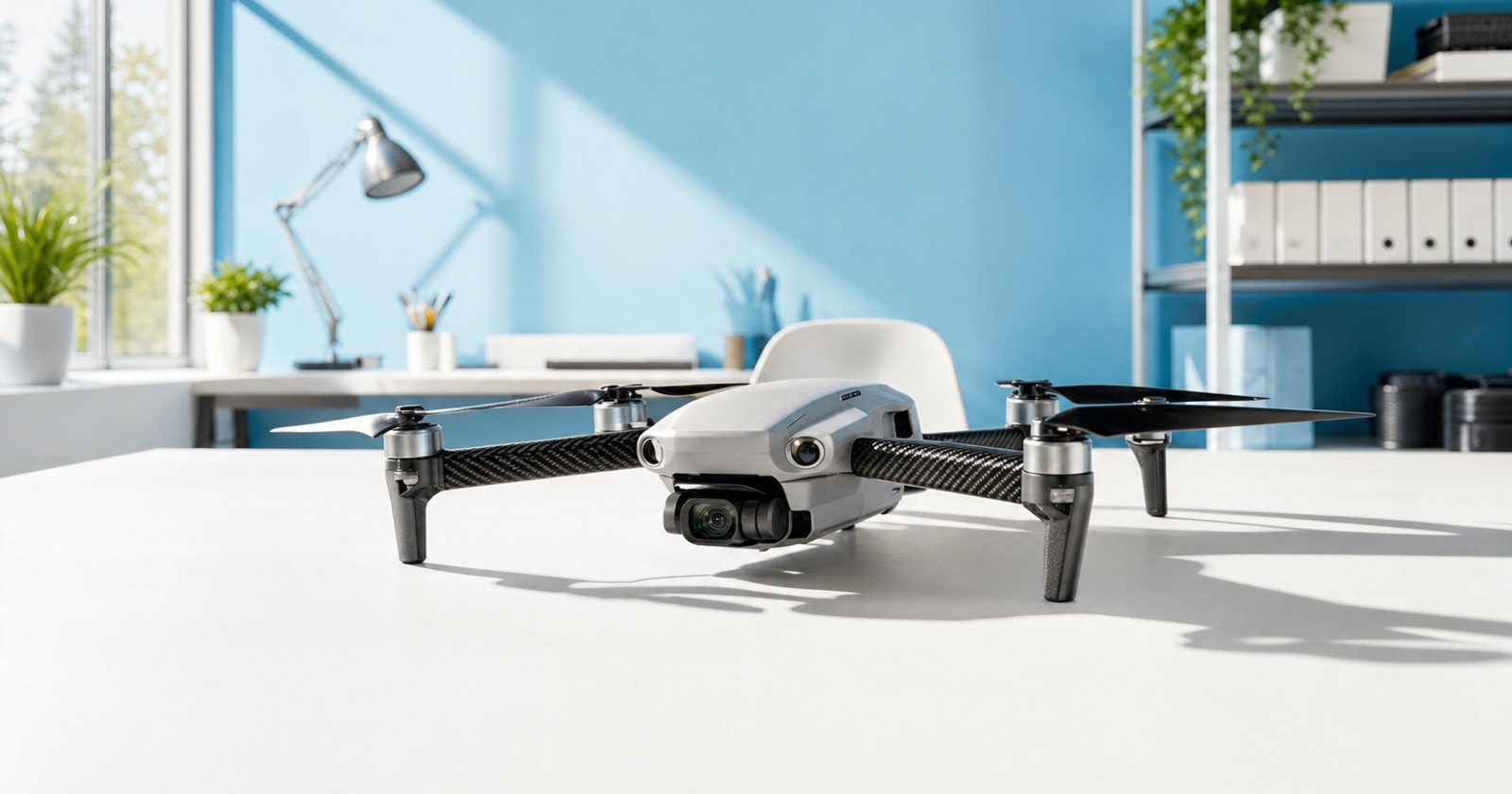
The capital will go toward two new drone programs: Archer AI, an FPV platform with autonomous terminal guidance, and Bandit, a counter UAS interceptor designed to defeat Class 2 and 3 drone threats. Both platforms are engineered to support multi asset control (swarming) while staying cost efficient enough for mass production. Neros's stated target is one million drones per year. Funding will also support international expansion and sovereign manufacturing in allied nations.
That is a remarkable headline on its own. But what is more instructive for anyone running a field service or project business is how Neros builds its products, not just how much capital they raised.
The Vertically Integrated Stack
Neros does not bolt AI onto a third party hardware platform and call it a product. They own the flight computers. They design the jamming resistant radios. The software and the physical stack are built together, by the same team, for the same operational outcome. AI is a layer on top of proven physical processes, not a substitute for them.
That design philosophy is the part worth stealing.
The Trap of the Point Tool Stack
Here is what the typical 30 to 150 person trade contractor operation looks like today:
- A CRM for leads and customer records
- A separate quoting tool (or a quote template buried in a shared Drive folder)
- A dispatch/scheduling app that does not talk to the CRM
- A project management tool for the larger jobs
- A paper or PDF based change order process
- A time tracking app that exports to a spreadsheet
- QuickBooks for invoicing and the books
- A separate HR or payroll system
- A group chat (WhatsApp, Teams, whatever) that serves as the connective tissue for all of the above
Each of those tools works fine in isolation. The failure is at the seams. When a tech closes a work order on their phone, that information has to travel through three or four handoffs before it becomes an invoice. When a project manager approves a change order in the field, someone back in the office has to manually update the job cost in QuickBooks. When a permit is about to expire, whoever is supposed to know that relies on a calendar reminder or their own memory.
The human beings doing those handoffs are not a flaw in the system. They are the system. And that means the system's reliability is capped by human availability, attention, and time.
Neros built the opposite of that. Every component in their drone programs is designed to reduce the number of places where information has to jump a gap.
What "Vertical Integration" Actually Looks Like in Field Operations
You do not manufacture drones. But the operational principle translates directly.
Vertical integration in a field service or project business means that the same platform that captures the customer inquiry also generates the quote, schedules the crew, sends the work order to the field, receives the completed job data, captures the change order, exports the invoice, and records the time against the job cost. Not as a wish list. As a continuous, unbroken chain.
Here is a simple way to audit how integrated your current stack actually is:
A Practical Audit: Where Does Information Jump a Gap?
Walk through your last completed project or service job and ask these questions at each stage:
- Customer intake to quote: Did someone manually re enter customer info to build the proposal?
- Quote to dispatch: Did a human have to read the accepted quote and then create the work order separately?
- Dispatch to field execution: Did the technician get all the job context they needed on their phone, or did they call the office?
- Field completion to invoice: How many hours between job close and invoice sent? Who touched it?
- Change orders: Was every scope change on that job captured, approved, and billed? Or did one slip through?
- Job cost vs. actual: Could you pull up the real margin on that job today, or would you have to reconstruct it from multiple sources?
- Timesheets to payroll: How many manual steps does that export take?
Each "yes, a human did that manually" answer is a gap. Gaps have a cost: time, errors, and unbilled work.
Most shops that do this audit honestly find two or three gaps they did not realize existed, including at least one that is leaking billable revenue.
The Change Order Problem Is Almost Always the Biggest One
In mixed service and project operations (HVAC maintenance contracts plus equipment installs, electrical service calls plus panel upgrades), the change order process is where money most reliably disappears. The field team does the extra work. The PM says they will write it up. The customer verbally agrees. Then the job closes, the invoice goes out without the extra scope, and three weeks later nobody can remember the details clearly enough to add it.
This is not a people problem. It is a structure problem. If your change order workflow lives in a different tool than your invoicing workflow, the gap between them will consume revenue.
AI Layered on Proven Process, Not Instead of It
One more thing Neros's approach highlights: AI is most effective when it is layered on top of a working operational process, not used to paper over a broken one.
In field service, that distinction matters. There is real value in AI that can read and score 40 job applications overnight so your operations manager spends 20 minutes instead of three hours on initial screening. There is real value in an AI scheduling assistant that can handle inbound booking requests and route them to the right tech. But none of those tools do anything useful if the underlying data is scattered across five platforms with no common thread.
The sequence has to be: get the workflow continuous first, then layer intelligence on top. Neros did not bolt autonomous guidance onto a commodity airframe. They built the airframe around the guidance system. The order of operations matters.
The Practical Takeaway
If you are a contractor running a 20 to 200 person shop on a scatter of point tools, the Neros story is not about drones. It is about a design principle: own the full stack, reduce the gaps, then make it smarter.
In practice, that means doing the gap audit above honestly, identifying the two or three handoffs that are costing you the most time or the most money, and then asking whether your current toolset can close them or whether it structurally cannot.
The shops that close those gaps tend to find real money fairly quickly. Not because they bought new software, but because billable work that was slipping through the cracks stopped slipping.
PolarPath was built specifically for field service and project operators who run both reactive service and planned projects from the same team. It spans the full chain from customer intake through quotes, dispatch, field execution, project management, change orders, invoicing, timesheets, and workforce, working alongside QuickBooks rather than replacing it. The AI features sit on top of that continuous workflow, which is the only place they actually work.
If doing that gap audit above surfaces a few handoffs you would rather not own manually, that is the conversation worth having. See how the pieces fit your operation at polarpath.ca.