
When $450M Flows Into Industrial AI Robotics, Field Service Contractors Should Pay Attention
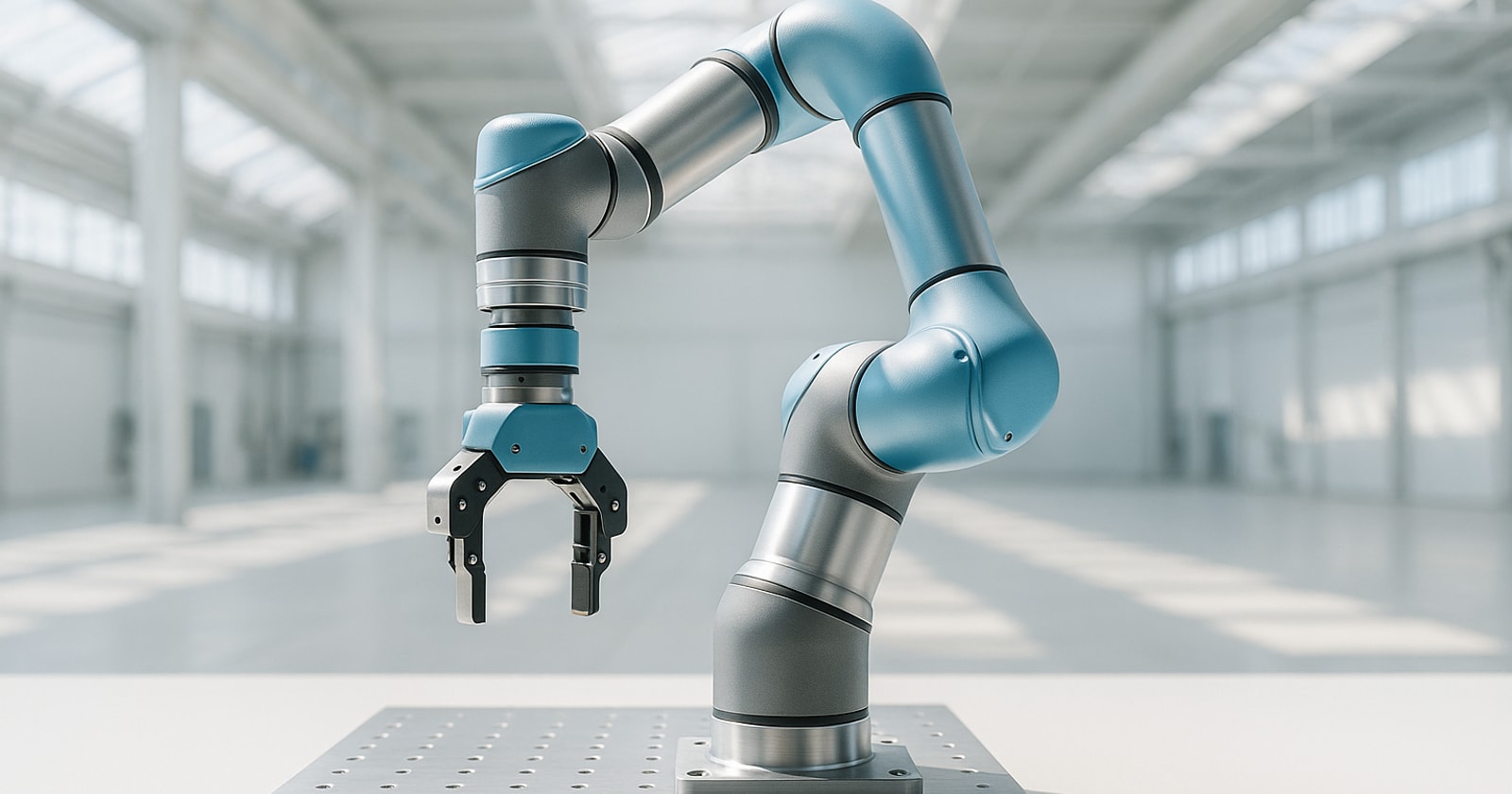
Rhoda AI, a Palo Alto based robotics startup, emerged from stealth this week with $450 million in Series A funding, one of the largest disclosed funding rounds in the U.S. for the week of June 17, 2026. The company is building an AI powered industrial robotics platform aimed at automating complex manufacturing and industrial tasks, and the raise places it among the most well capitalized new entrants in a sector that has seen a surge of mega rounds throughout 2026.
That number is worth sitting with. $450 million, Series A, into a company that hasn't been public until now. Investor appetite for physical AI and intelligent automation, systems that can operate in the real, messy, unstructured world, is accelerating fast. And while Rhoda AI is targeting manufacturing and industrial environments, the underlying signal matters well beyond the factory floor. If you run an HVAC, electrical, mechanical, or facilities operation in Canada, this story is relevant to you.
What "Physical AI" Actually Means for the Trades
The term "physical AI" has been floating around venture capital circles for a while, but the concept is straightforward: software intelligence applied to physical work, not just screens and data. Industrial robots guided by AI that can adapt to changing conditions, not just follow a fixed script.
That distinction, adaptive versus scripted, is the part that changes things for trades and field service businesses.
For years, the automation tools available to contractors were rigid. Scheduling software that required perfect data to produce a schedule. Billing systems that waited for humans to key in the right codes. Dispatch boards that showed you conflicts only after you'd already booked the crew. These tools automated the easy, repetitive parts but broke down the moment work got complex or conditions changed.
What the new wave of AI powered systems promises is adaptation. The ability to handle ambiguity, flag exceptions, and keep a workflow moving without requiring a human to stop and manually resolve every edge case.
That promise is now attracting serious capital. And it's worth thinking carefully about what it means for how field service and project businesses operate day to day.
The Real Problem Isn't Robots, It's Invisible Handoffs
Before any contractor reaches for the word "automation," it's worth diagnosing where the actual friction lives in their operation. Most field service businesses don't suffer from a lack of technology. They suffer from a lack of continuity between the tools they already have.
Think about the standard workflow in a mid size HVAC or electrical shop running both reactive service and planned projects:
- A customer calls in. Someone logs it in one system.
- A quote gets built, sometimes in a spreadsheet, sometimes in a different tool.
- The job gets dispatched. The crew shows up, does the work, maybe encounters a scope change.
- The change order either gets captured or it doesn't.
- An invoice gets generated, days or weeks later, manually reconciled from field notes that may or may not match what was quoted.
- Collections follow, if anyone remembers to follow up.
Every arrow between those steps is a handoff. And every handoff is a place where information gets lost, delayed, or distorted. The unbilled change order. The permit that expired because nobody set a reminder. The crew double booked because dispatch and project scheduling live in different tools. These aren't technology failures, they're coordination failures that happen because the tools don't share operational truth with each other.
That's the problem that intelligent automation, properly applied, can actually solve for contractors.
A Framework for Thinking About Automation in Your Shop
The surge of investment into industrial AI is a useful forcing function. It means better tools are coming, and faster than most operators expect. Here's a practical way to think about where to focus.
1. Map the handoffs, not the tasks
Don't start by asking "what can we automate?" Start by asking "where does information die?" Walk your workflow from customer intake to cash collected and mark every point where a human has to manually move data from one place to another, or chase someone for an update. Those are your highest value targets, because that human middleware is slow, error prone, and often invisible until something falls through.
2. Separate "eliminate the task" from "eliminate the delay"
Some automation replaces a task entirely (a confirmation email that goes out automatically the moment a work order is created). Some automation eliminates delay but not the task (a field tech still fills out the job report, but it flows directly into invoicing without anyone re keying it). Both matter. Eliminating delay is often easier and faster to implement, and in a trade business running on margin, days to invoice is a real number with real dollars attached.
3. Prioritize billable work that isn't getting billed
This is the most direct ROI conversation in field service. Change orders that get done in the field but never make it to an invoice. Extra materials that get used but never charged. Overtime that happens but doesn't flow into a payroll export. These are operational failures, not accounting failures, they happen upstream, in the execution layer, before any accounting system ever sees the data. Automation here isn't about speed; it's about capture.
4. Think about your people problem alongside your process problem
The capital flowing into industrial automation isn't just a response to efficiency pressures. It's a response to a skilled trade shortage that is real, ongoing, and showing no signs of easing. Automation that reduces the administrative burden on your best people, your experienced techs, your project managers, your dispatch leads, is automation that extends their capacity. Every hour a senior tech spends re keying data or hunting for a work order is an hour they're not doing the work only they can do.
Where Software Fits Right Now (Before the Robots Arrive)
Industrial robotics at the Rhoda AI scale is built for manufacturing environments. The trades are a different context, fragmented job sites, variable conditions, small crews, complex regulatory requirements. Full physical automation of field service work is not around the corner.
But the software layer that connects intake to execution to billing to workforce? That's available right now, and it's where most contractors have the most room to close the gap between what they're doing and what their operation could look like.
The principle is the same as what makes physical AI valuable in manufacturing: replace the human middleware that just moves information from one place to another, so that your people can focus on work that actually requires judgment, skill, and presence.
A platform like PolarPath is built on exactly that principle for field service and project operations: one continuous workflow from customer intake through quoting, dispatch, field execution, project management, invoicing, and workforce, working alongside QuickBooks rather than replacing it. The goal is operational continuity, so that when a change order happens in the field, it doesn't require three people and two days to get it onto an invoice.
That's not a robot. But it's the same underlying logic that's attracting $450 million to a startup most people hadn't heard of last week.
The Takeaway
The Rhoda AI raise is a data point about where the world is headed, not a product your shop can buy tomorrow. But the underlying shift it reflects, capital and attention moving toward systems that can operate intelligently in complex physical environments, is a useful signal for any contractor thinking about their operation.
The practical questions to ask this week:
- Where in our workflow does information die or get delayed between steps?
- How much billable work is slipping through because execution and invoicing aren't connected?
- Are our best people spending time on tasks that software should own?
The wave is coming. The contractors who benefit most from it will be the ones who've already built a foundation of operational continuity, where the work that happens in the field is the same truth the office sees in real time.
Book a walkthrough at polarpath.ca if you want to see what that looks like in practice.