

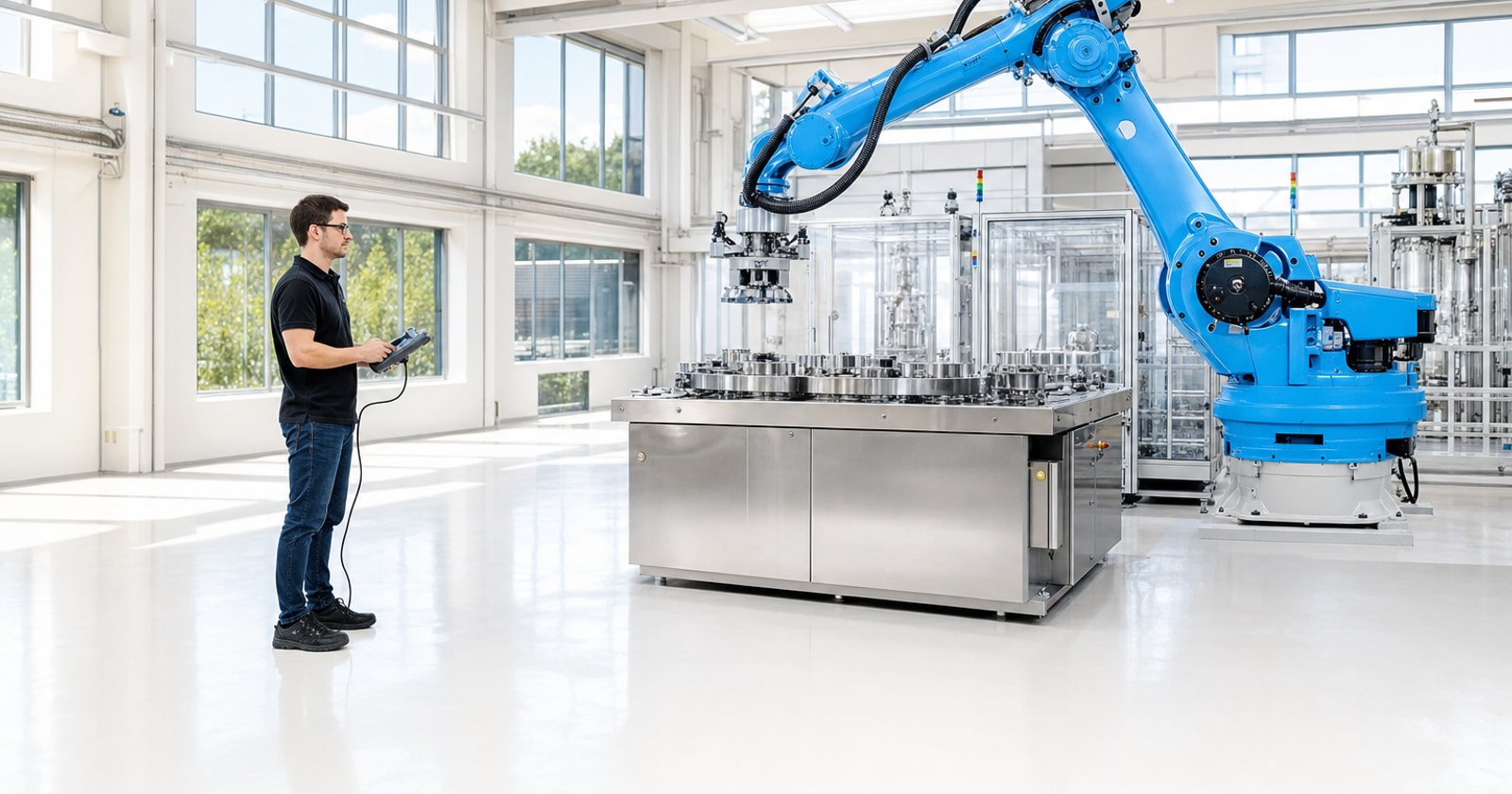
Most contractors don't spend much time watching factory automation news. But when the federal government puts $6 million behind a Cambridge, Ontario firm to accelerate digital manufacturing, it's worth pausing to ask what that signal means for operations focused businesses outside the factory floor, including the HVAC shops, electrical contractors, mechanical firms, and facilities teams that keep those factories running.
The answer is more relevant than it might first appear.
The News: FedDev Ontario Backs Eclipse Automation's Digital Push
On July 24, 2026, Eclipse Automation, a Cambridge, Ontario based firm with 25 years of automation engineering and manufacturing experience, announced a $6 million investment from the Federal Economic Development Agency for Southern Ontario (FedDev Ontario). The funding flows through two federal programs: the Regional Tariff Response Initiative and the Regional Defence Investment Initiative.
The stated goal is to help Eclipse drive efficiencies through new digital manufacturing technologies as the company builds out its digital capabilities and continues to grow.
That's not a small signal. When both private capital and federal economic development programs start pointing in the same direction, toward operational digitization, toward reducing manual overhead, toward connecting the physical work to digital data in real time, it tells you something about where the entire operations economy is heading, not just manufacturing.
Why Contractors Should Pay Attention to This Trend
Here's the thread that runs from Eclipse's factory floor to your dispatch board: the core problem digital manufacturing solves is the same problem trade contractors deal with every day.
In a factory, the old model is: a machine runs, a human writes something down, another human re enters it somewhere else, a manager asks for a status update, and by the time the information reaches a decision maker, it's already stale. Digital manufacturing replaces that chain of human middleware with systems where operational data flows continuously, from machine to dashboard to decision.
In field service and project contracting, the equivalent chain looks like this: a technician does work, a paper ticket gets filled out, someone back enters it into dispatch software, someone else manually creates an invoice in QuickBooks, a project manager asks for a job cost update, and the answer takes two days to assemble from three different spreadsheets. The result is the same: slow, error prone, invisible until something falls through the cracks.
The Eclipse investment is a signal that government and private funders are placing a clear bet on eliminating that human middleware, not as a nice to have, but as a competitive necessity. For trade contractors operating in the same Ontario economy, the question is: when does your operation make the same move?
The Practical Gap: Where Manual Overhead Actually Costs You Money
Before thinking about solutions, it's worth being specific about where the manual overhead actually shows up in a mixed service and project contracting business. These are the operational mechanics that digital systems are designed to address:
1. The Unbilled Change Order
A field tech or project manager authorizes additional scope on site. The work gets done. The change order lives on a clipboard, in a text message, or in someone's memory. By the time it surfaces for billing, the invoice has already gone out, or worse, the customer disputes it because there's no documented trail. This is a margin problem, not an admin problem. The work was done; the revenue was lost.
2. The Stale Job Cost Snapshot
A project manager needs to know whether a mechanical job is tracking to budget. To find out, they pull hours from one system, materials from another, and subcontractor costs from a spreadsheet. The answer they get reflects last week's reality, not today's. Decisions get made on outdated numbers, and scope creep compounds before anyone can act on it.
3. The Dispatch Conflict That Wastes Truck Time
A service coordinator books a technician for a preventive maintenance run. The same technician is already scheduled for a project site two hours away. Nobody catches it until the tech calls in. A truck rolls the wrong direction. A customer call gets delayed. The cost is real, and it doesn't show up cleanly in any report.
4. The Invoice That Takes Weeks
A field job closes. The timesheet is in one system, the materials are in another, and the work order notes are on paper. Someone has to stitch all of that together before an invoice can go to QuickBooks. Every day of delay is a day of working capital you don't have.
None of these are exotic problems. They're the standard operating friction of a contracting business that has outgrown founder led coordination but hasn't yet replaced the human middleware with a connected system.
What "Digital Operations" Actually Looks Like for a Contracting Business
The Eclipse story is about digital manufacturing, but the operational principle translates directly. Here's a practical framework for thinking about where to digitize, and in what order:
Step 1: Close the field to billing loop first
The highest ROI move in most contracting businesses is connecting what happens on site directly to what gets invoiced. Field technicians log work in a mobile app, attach photos, capture signatures, and note materials used. That data flows directly into draft invoices without a re entry step. Change orders are documented at the point of authorization, not reconstructed afterward.
Step 2: Give project managers live job cost visibility
Project margin shouldn't be a number you calculate at month end. Labour hours, purchase orders, subcontractor costs, and change orders should roll up continuously so a project manager can see at a glance whether a job is healthy or eroding. That visibility lets you act while there's still time to act.
Step 3: Consolidate dispatch across service and project work
Trade contractors who do both reactive service and planned projects run a scheduling problem that's genuinely complex: the same technicians often support both workstreams. A single dispatch view that shows field status, project commitments, and technician availability in one place eliminates the coordination gaps that create double bookings and wasted drive time.
Step 4: Connect the workforce layer
Timesheets, expenses, and job assignments need to live in the same system as the work orders and project plans. When they don't, payroll prep is a manual reconciliation exercise, and utilization numbers are fiction.
Step 5: Keep QuickBooks as your accounting system
Digitizing operations doesn't mean replacing your accounting software. QuickBooks stays the system of record for the general ledger. The operational layer, where business events actually happen, from dispatch to invoicing to project management, is where you need connected, real time data flow. Both systems do their job; the critical thing is that they talk to each other cleanly.
What This Means for Operations Focused Contracting Shops
The Eclipse Automation investment is a reminder that operational digitization isn't a startup trend. It's now backed by federal economic development policy in Ontario because policymakers recognize that manual overhead is a drag on growth, competitiveness, and resilience. The same logic applies to the contracting firms that service the facilities those factories operate in.
The gap between contractors who have connected their workflows and those still running on tool sprawl is widening. Not because technology is magic, but because the compounding cost of unbilled work, delayed invoices, and stale project data adds up differently when your competitors have eliminated it.
If you're running a field service or project contracting business in the GTA or elsewhere in Ontario, the practical question isn't whether to digitize operations. It's where to start, and how to do it without ripping out the tools that already work.
That's the specific problem PolarPath was built to address: a single operational platform that covers the full workflow from customer intake through quoting, dispatch, field execution, project management, invoicing, and workforce, sitting alongside QuickBooks rather than displacing it. The factory automation story and the field service story are different in scale, but the underlying principle is the same. When operational data flows without human middleware in the middle, the business runs closer to what it's actually capable of.
The Practical Takeaway
You don't need a $6 million federal grant to start reducing manual overhead in your operation. You need to identify the two or three handoffs in your current workflow where data falls out of one system and gets re entered into another, and ask what it would take to close those gaps. The field to billing loop is almost always the right place to start. Fix that one connection, and the business effect shows up in margin, cash flow, and admin hours within weeks.
The investment news out of Cambridge is a useful confirmation that the direction is right. The work of actually making it happen in your shop is yours to do.
See how PolarPath fits your operation at polarpath.ca.