

What a $100M Raise Says About Where Operational AI Is Headed
Most contractors adopting AI tools right now are focused on the front end: will this thing book appointments? Can it sort through resumes? Does the scheduling assistant actually save my dispatcher time? Those are the right questions to ask at the start. But a funding round announced this week points to a different, harder problem, one that shows up after the AI is running.
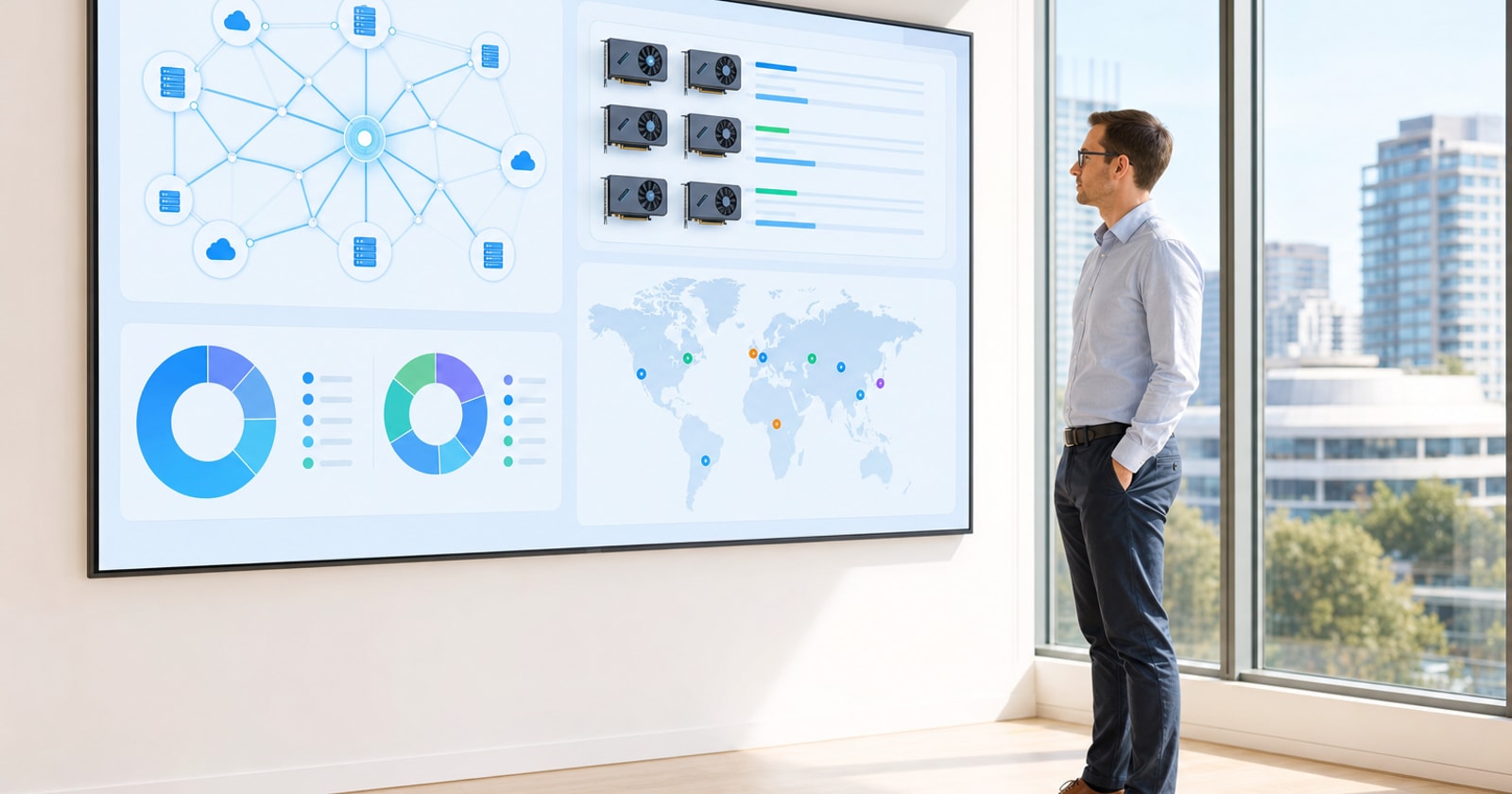
Spectro Cloud raised more than $100 million in a Series D round, led by Growth Equity at Goldman Sachs Alternatives, with strategic investment from AMD Ventures, Ericsson, LG Technology Ventures, and Maximus. The raise brings their total capital to $260 million. Spectro Cloud builds infrastructure management software for enterprises running AI at scale, GPU clusters, AI factories, Kubernetes environments, edge locations, air gapped facilities. Their PaletteAI platform gives large organizations a single operating model across all of that. Customers include T Mobile, Airbus, Yum! Brands, and the U.S. Air Force. The new capital goes toward expanding the platform and growing into Europe, the Middle East, and Asia Pacific.
The round was oversubscribed, which is a signal worth paying attention to. Capital at that level, from that group of investors, doesn't flow toward a niche problem. It flows toward a problem that a lot of serious organizations share. The problem here: once AI is in production and making real decisions, governing and managing it becomes a discipline unto itself.
That matters to field service and project contractors more than it might seem.
The AI Adoption Curve in Field Service
If you run an HVAC, electrical, mechanical, or facilities shop in the 20 to 300 employee range, you're likely somewhere in the early to middle part of an AI adoption curve. Maybe you've tried an AI receptionist that handles inbound calls after hours. Maybe you've looked at tools that score job applicants automatically. Maybe you're testing something that suggests dispatch assignments based on tech location and skill set.
These are genuine use cases, and they work. But they share a common trait: they're point tools solving a narrow problem. The AI is contained. If it gives a bad answer once, a human catches it. The stakes are manageable.
The Spectro Cloud story is about what happens next, as AI moves from contained to continuous, from "a tool that helps with one task" to "a system that's running parts of your operation." At that point, the question shifts from "does it work?" to "how do I know it keeps working, consistently, correctly, and in a way I can audit?"
For the enterprises in Spectro Cloud's customer base, that governance question is now a capital intensive infrastructure problem. For a 75 person mechanical contractor, the same underlying question shows up in a much more practical form.
What "AI Governance" Actually Means for a Trade Contractor
You don't need GPU clusters to have an AI governance problem. Here's what the practical version looks like at your scale:
1. Can you see what the AI decided, and why?
If an AI scheduling tool bumped a job, or an AI applicant screener ranked someone low, can your dispatcher or hiring manager see the reasoning? Or is it a black box with a recommendation attached? Visibility into the decision is the minimum bar for using AI in any workflow that touches customer commitments or employment.
2. Does the AI have clean data to work with?
AI tools are only as good as the operational data underneath them. If your dispatch history is split across a spreadsheet and a whiteboard, if your job records don't close out properly when work is done, if your timesheets don't match your work orders, the AI is reasoning on noise. Garbage in, unreliable recommendations out. This is not a software problem; it's a data discipline problem that has to be solved at the process layer first.
3. What happens when the AI is wrong?
Every AI tool gets it wrong sometimes. The question is whether your workflow catches it, and whether the cost of a bad call is recoverable. An AI receptionist that misquotes a service window is recoverable. An AI that auto generates a change order with wrong scope and it goes to the customer unchecked is not. Know which decisions in your workflow have recovery paths and which ones don't.
4. Who owns the output?
This sounds organizational, but it's operational. When an AI tool produces a schedule, a score, a recommendation, or a draft document, someone on your team needs to own the output, which means reviewing it, approving it, and being accountable for it. AI in a field service business doesn't replace operational ownership; it shifts where the human judgment gets applied.
A Simple Framework: Where AI Fits in Your Workflow Right Now
Here's a practical way to think about where to let AI run and where to keep a human in the loop, based on the consequence of an error:
Low consequence, high volume tasks, run AI with light oversight
- Inbound call handling and appointment intake
- Applicant resume screening and fit scoring
- Timesheet anomaly flagging
- Reminder sequences for quotes that haven't been followed up
Medium consequence tasks, AI recommends, human approves
- Dispatch assignments for complex multi tech jobs
- Change order drafts
- Invoice generation from field data before it goes to the customer
- Job costing updates mid project
High consequence tasks, AI informs, human decides
- Contract terms or pricing commitments
- Permit related scheduling (expiry, inspection windows)
- Subcontractor compliance decisions
- Any customer facing communication involving scope or dollar amount
This isn't a permanent framework. As AI tools mature and you build confidence in the data underneath them, tasks move from the right column toward the left. But starting here keeps the recoverable mistakes recoverable.
What the Spectro Cloud Round Actually Signals for Your Business
The reason a $100M infrastructure round matters to a contractor who will never buy enterprise AI infrastructure software is the signal it carries about the direction of the market.
Capital at this scale, in this category, means enterprises are committing to AI in production in a serious way. That creates a downstream effect: the AI tools that reach your market in the next few years will be built with production governance in mind from the start, because the enterprises setting the product expectations will demand it. Better auditability, cleaner recommendation trails, clearer handoffs between AI and human decision makers, these will become table stakes in the tools you evaluate, not differentiators.
The practical implication for a field service operator today: the foundation you build right now matters. If you're running AI tools on top of disconnected data, manual handoffs, and systems that don't share operational truth, you're building on sand. When the AI is wrong, you won't be able to tell why, and you won't have a clean data trail to fix it.
The contractors who will get the most out of the next generation of AI tools are the ones who first got their operational data in order, who know that a work order closes out correctly, that a change order gets billed, that a timesheet matches the job record, that dispatch and project management are working from the same picture.
The Operational Foundation That Makes AI Actually Work
This is where PolarPath's design philosophy becomes relevant to the conversation. PolarPath is built around the idea that operational truth, what was quoted, what was done in the field, what was billed, where the crew is, what the project margin looks like in real time, should flow continuously through one platform, not get re keyed between five disconnected tools. It works alongside QuickBooks rather than replacing it, owning the execution layer where business events actually happen.
The reason that architecture matters for AI isn't abstract. When scheduling, dispatch, change orders, timesheets, and project tracking all live in one continuous workflow, the data the AI reasons on is clean, current, and complete. The AI applicant screening in PolarPath's hiring module, for example, works because the job posting, the applications, and the hiring pipeline are all in one place, the AI isn't trying to reconcile data from three separate systems. The same logic applies to any AI assisted dispatch or project workflow.
The Spectro Cloud story is about what happens when large enterprises realize that running AI in production requires serious infrastructure investment. For a field service contractor, the parallel is simpler but no less real: running AI in your operation requires a clean operational foundation. That's the prerequisite that determines whether the AI tools you invest in actually deliver.
Practical Takeaway
You don't need to understand Kubernetes or GPU clusters to take something useful from this week's news. The signal is this: AI in operations is moving from experimental to mission critical, and the organizations that succeed with it are the ones who treat the data and workflow foundation as seriously as the AI tools themselves.
Start there. Audit where your operational data lives and where it breaks down. Map the handoffs that rely on a human re entering something. Identify the AI decisions in your workflow that have no audit trail. Fix those things first, and the AI tools you layer on top will actually stick.
If you want to see what a continuous operational platform looks like for a mixed service and project business, the conversation starts at polarpath.ca.