

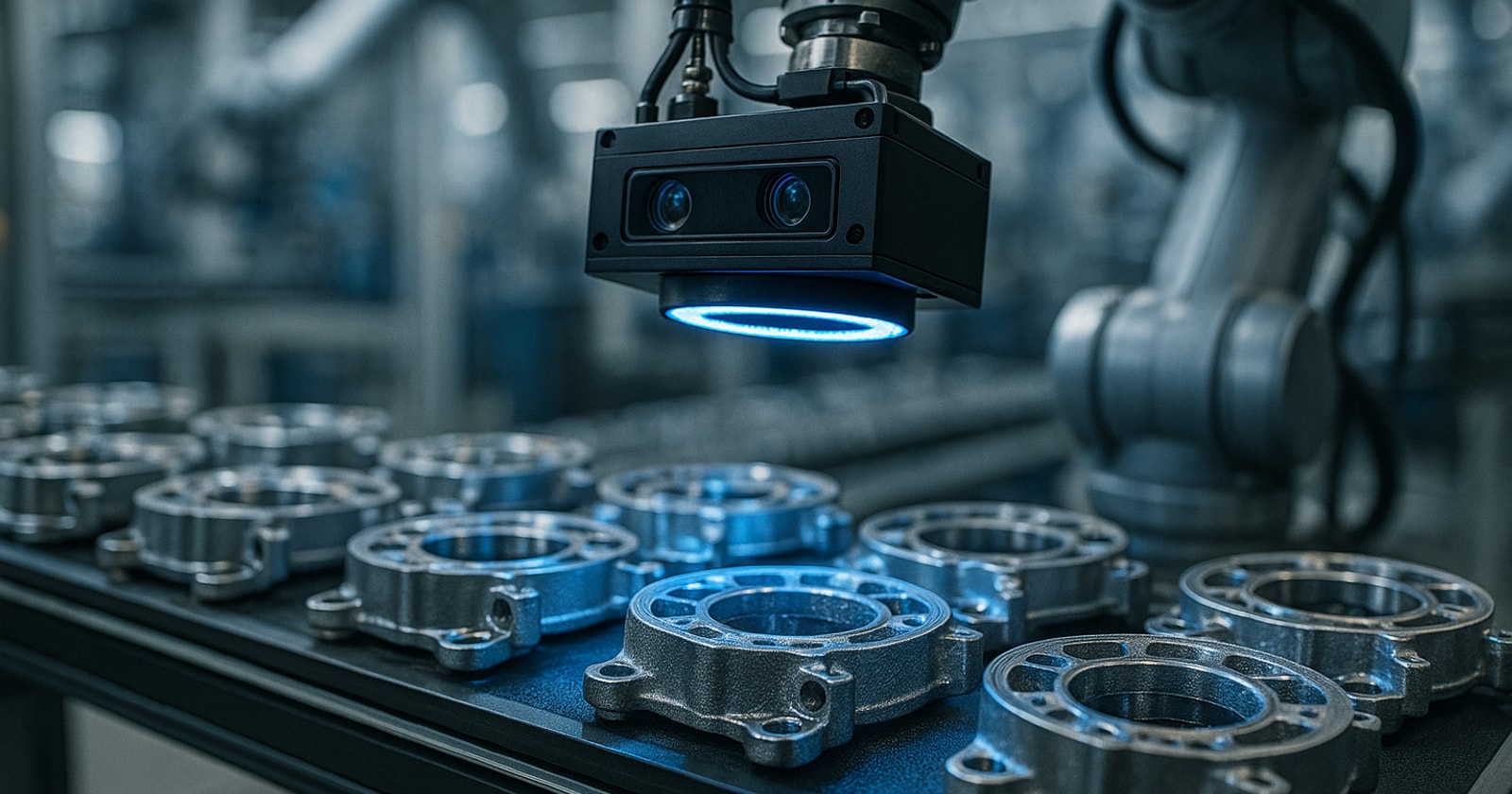
North America's largest robotics and automation event is underway in Chicago right now. Automate 2026 (June 6 to 9) is showcasing a wave of AI driven machine vision, vision guided robotics, and intelligent manufacturing technologies. Industry analysts covering the event note that AI is moving beyond hype into practical industrial deployment, with strong demand for solutions that deliver measurable operational benefits. The convergence of AI, 3D imaging, edge processing, and robotics integration is shifting machine vision from a supporting role to a central pillar of modern automation strategy.
That story is about manufacturing floors. But if you run a field service or project operations business, the underlying shift is directly relevant to your capital investment decisions, your workforce planning, and how you think about operational quality control.
Why Automation Benchmarking Matters to Field Service Operators
Most trade contractors and facilities operators don't attend automation expos. The machinery on the show floor is aimed at production lines, not service vans. But the AI and process automation thinking on display at events like Automate 2026 is the same logic that applies to any operations team trying to get consistent, repeatable outcomes from a workforce doing complex, variable work.
The honest question worth asking: where in your own business are humans currently acting as middleware? Where are people manually re keying data, chasing handoffs, or making judgment calls that a well configured system could handle without the lag?
That question is what Automate 2026 is really about, just translated into machine vision and robotics instead of field service dispatch and invoicing.
Three Automation Themes from Automate 2026 (and What They Mean for Your Shop)
1. AI That Catches What Rule Based Systems Miss
The headline technology at Automate 2026 is AI powered machine vision: systems that combine traditional inspection logic with deep learning models capable of detecting subtle defects that fixed, rule based approaches miss. In manufacturing, this means fewer escapes, more consistent quality, and less reliance on a single experienced inspector who carries all the institutional knowledge in their head.
In field service and project work, the analog is this: your current quality control is mostly human and mostly informal. A senior tech reviews a job closeout. A PM skims a change order before it goes out. A dispatcher eyeballs the schedule for conflicts. These are all judgment calls that depend on the right person being available at the right moment.
The operational risk isn't that your team is incompetent. It's that the system gives them no structural support. A change order can move through without a margin check. A work order can close without triggering an invoice. A permit can approach expiry with no one flagging it.
The AI inspection insight from manufacturing: build the check into the workflow, not into the habit of one person.
2. Edge Processing Brings Decisions Closer to Where Work Happens
One of the technical shifts highlighted at Automate 2026 is the move toward edge processing: running AI inference at the point of work (on a machine, in a factory cell) rather than routing everything back through a central server. The benefit is speed and reliability. Decisions happen where the work is happening, without waiting on a round trip to the cloud.
For field service operations, this principle maps directly to mobile execution. A field technician who can complete a work order, capture photos, log materials, and trigger an invoice from the job site, without waiting to sync with the office, is operationally equivalent to an edge processing node. The work event and the data event happen at the same time, in the same place.
The gap most shops have: their technicians are still doing the physical work at the edge, but all the data (timesheets, expense logs, job completion notes) gets batched back to the office hours or days later. That lag is where billable work gets lost.
3. Workforce Augmentation, Not Workforce Replacement
The framing at Automate 2026 is workforce augmentation: AI and robotics taking on the repetitive, variable, or hazardous parts of a task so that skilled workers can focus on the work that actually requires their judgment. The goal is better utilization of the people you already have, not headcount reduction.
This is the right frame for field service operators, too. The technicians and project managers on your team are skilled. The waste isn't in their craft. It's in everything around the craft: the calls to find out what parts are on the van, the manual timesheet entry at the end of the week, the back and forth to confirm whether a change order was approved before starting additional scope.
Augmenting a skilled workforce in field service means giving them a system that handles the administrative and coordination overhead automatically, so their attention stays on the work that requires human judgment.
How to Use Automate 2026 as a Benchmarking Tool (Even If You're Not in Chicago)
You don't need a badge to get value from this event. Here's a practical framework for using it as a benchmarking reference for your own operations investment decisions this year.
Step 1: Identify your highest cost handoffs. Where does a work event (a completed job, an approved change order, a permit renewal) require a human to manually move information from one place to another? List the top three. These are your highest risk gaps.
Step 2: Ask the same question the manufacturers are asking. "Is this a task that requires skilled judgment, or is it a task that requires consistent execution of a known rule?" Skilled judgment belongs to your people. Known rules belong to your systems.
Step 3: Benchmark against what's now possible. The Automate 2026 coverage confirms that AI driven inspection and automation are moving from pilot projects into standard deployment. That means the cost of capable systems is declining and the implementation risk is lower than it was even two or three years ago. If you've been deferring a tool or platform decision because "the technology wasn't ready," that deferral calculus is worth revisiting.
Step 4: Prioritize by operational impact, not by novelty. Don't buy a tool because it has AI in the name. Buy it because it eliminates a specific handoff that is costing you billable work, delaying your close out cycle, or exposing you to compliance risk. The machine vision story at Automate 2026 is compelling because it solves a specific, measurable problem (defect detection). Apply the same standard to any software or automation investment in your own shop.
Where PolarPath Fits in This Picture
PolarPath isn't an automation vendor in the robotics sense. But the operational logic is the same: replace the human middleware in your quote to cash workflow with a continuous system where data flows automatically from customer intake through field execution through invoicing.
The modules that do this directly include: dispatch and work orders that trigger from approved quotes, field execution on mobile that closes the loop without an office trip, project change orders that carry margin visibility before they go out, permits with expiry reminders, and invoicing that builds from field data rather than from memory. It coexists with QuickBooks, which stays the accounting system of record.
The point isn't to pitch software at a robotics news story. The point is that the operational discipline Automate 2026 is showcasing in manufacturing, build the check into the system, move decisions to where the work happens, augment skilled workers with structure, is the same discipline that separates the field service shops running tight margins from the ones hemorrhaging billable work through disconnected tools.
The Practical Takeaway
Automate 2026 is worth watching even if your business never touches a factory floor. The underlying message is that AI powered inspection and process automation have moved from interesting to deployable. The businesses that will benefit most aren't the ones chasing the newest technology. They're the ones who have clearly mapped where their current workflows break down and are ready to replace that breakdown with something structural.
Start with your handoffs. Work backward from there.
If disconnected tools are the bottleneck in your own operations, see how PolarPath fits your shop at polarpath.ca.