

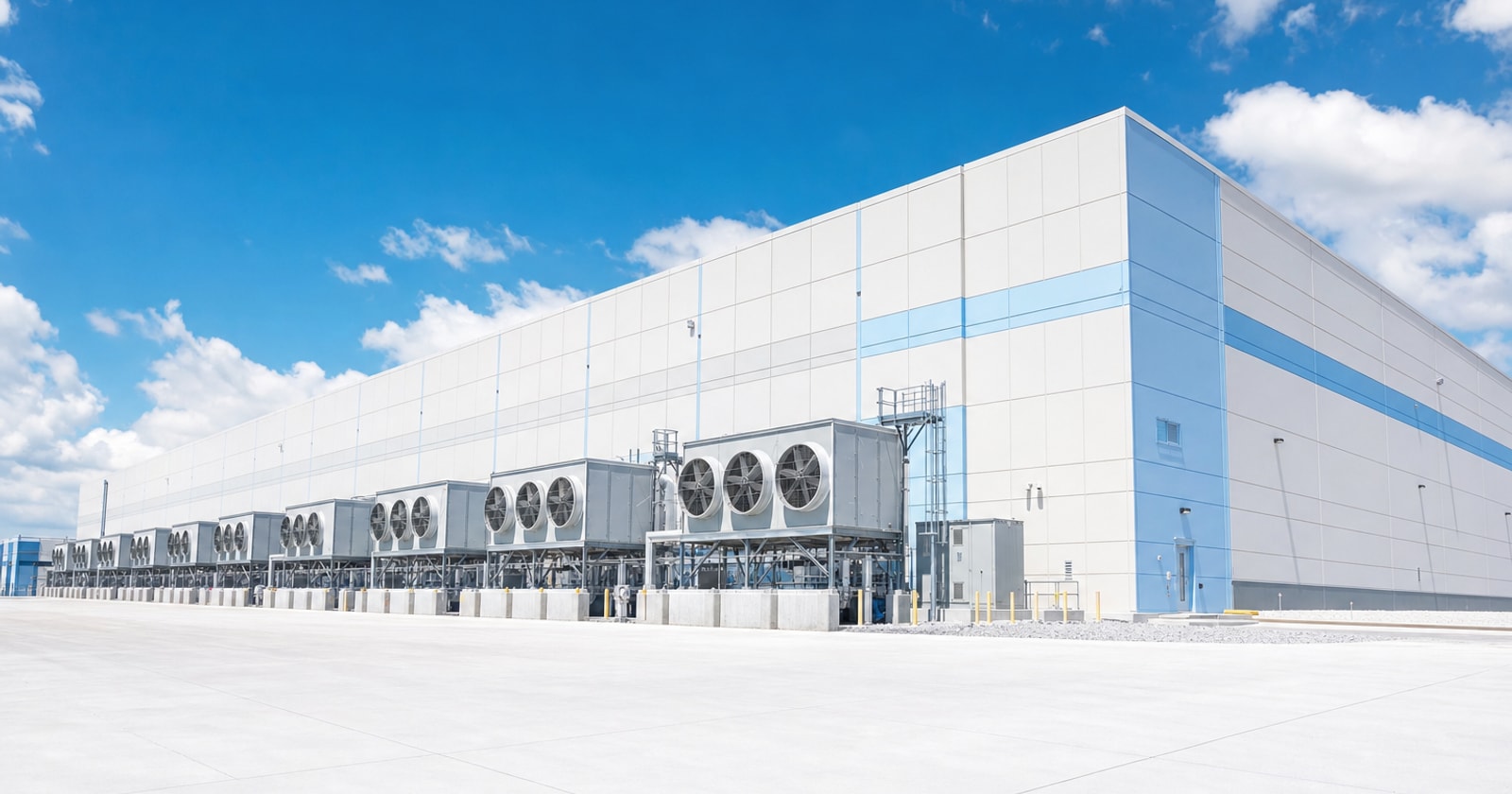
OpenAI recently elevated Uday Ruddarraju to a newly prominent role: Chief Technology Officer for Compute. According to YourStory, the appointment reflects how central large scale computing infrastructure has become to advancing AI capabilities. We're talking about the processing power, networking, and data center capacity needed to train and deploy the foundation models that underpin modern AI products. The move comes as competition among leading AI companies to command those compute resources is intensifying.
For most trade contractors, this feels like a story about a tech company doing a tech thing. And it is. But there's a practical thread in it worth pulling, because the AI tools your operations team is starting to rely on, or will rely on in the next 18 months, sit directly on top of infrastructure decisions like this one.
Why Infrastructure Investment Upstream Matters for Field Service Businesses Downstream
Think of it this way. When a general contractor invests in better logistics and supply chain management, subcontractors downstream get tighter lead times and fewer material delays. The investment is invisible to the sub, but its effects show up on the jobsite.
AI compute infrastructure works the same way. When a company like OpenAI appoints a dedicated CTO to focus specifically on compute, it is a signal that the organization is treating raw processing capacity as a core strategic constraint, not a background IT problem. That matters because the AI capabilities available to operations software vendors, scheduling assistants, dispatch optimization, automated screening, revenue agents, are partly gated by how much compute those foundation models can access and how efficiently that compute is allocated.
More capable, more available compute means:
- Models that respond faster (less latency for real time dispatch decisions)
- Models that can handle longer, more complex context (a full project file, a full work order history, not just a single message)
- Models that can be fine tuned more affordably on industry specific data (HVAC failure patterns, electrical inspection timelines, facilities maintenance cycles)
- New model capabilities reaching production software sooner
None of that changes your daily operations overnight. But if you're building a three year view of how your shop runs, the trajectory matters.
How AI Is Actually Showing Up in Field Service Operations Right Now
Set aside the theoretical. Here is where AI is already doing real work in operations platforms for trade contractors, and where the infrastructure improvements above will most visibly sharpen those tools.
Applicant Screening at Hiring Volume
Skilled trades hiring is a grind. You post to Indeed, get 60 applications for a journeyman electrician role, and someone on your team has to sort through resumes while also running dispatch. AI applicant screening changes that ratio. In PolarPath's recruitment module, every application (resume, cover letter, screening answers) is automatically read and scored against the specific job. Each candidate gets a fit score, a recommendation (interview, review, or reject), a confidence level, and a short written summary of strengths and concerns. The hiring manager sees a ranked, colour coded pipeline instead of an inbox.
Better compute infrastructure means those scoring models get sharper, handle more nuanced job criteria, and run faster as your applicant volume grows.
AI Revenue Agents (SDR, Receptionist, Scheduler)
The phone call your office missed at 7:45 AM on a Tuesday, that's a reactive service call that may or may not have gone to a competitor. AI receptionist and scheduler agents handle inbound inquiries, qualify them, and route them into your dispatch queue without a human in the loop. For mixed model shops (you do both reactive service calls and planned project work), this means your team isn't choosing between answering the phone and running the project schedule.
The quality of these agents depends directly on the underlying model's ability to maintain context across a conversation, understand trade specific language, and make sensible judgment calls. Compute investment drives those improvements.
Dispatch and Scheduling Optimization
Double booking a crew is a bad day. Sending the wrong certification to a permit required site is worse. AI assisted scheduling looks at technician availability, certifications, geography, and current workload to surface conflicts before they become field problems. As models get more capable, that assistance moves from "flag the obvious conflict" to "here is the optimal sequence for your three service calls and one project crew today, factoring in drive time and the parts pickup."
That kind of reasoning requires more compute per inference. Infrastructure investment is what makes it economically viable at the scale of a 50 person HVAC shop, not just a Fortune 500 logistics company.
A Practical Framework for Thinking About AI in Your Operations Stack
You don't need to follow the AI infrastructure race closely to benefit from it. But you do need a framework for evaluating which AI capabilities are worth adopting now versus which ones are genuinely not ready yet. Here is a simple three question screen:
1. Is the AI doing a repeatable, well defined task or an open ended judgment call?
Repeatable and well defined: applicant scoring against a job description, flagging an expired permit, generating a draft invoice from field data. These work reliably now. Open ended judgment calls: "should I take this project at this margin given current crew capacity?" That's still a human decision, and AI should surface the data, not make the call.
2. Does a mistake cost you money, time, or reputation?
For high stakes decisions (change order approval, customer facing communication, safety critical scheduling), keep a human in the loop. Use AI to prepare the decision, not finalize it.
3. Does the AI output stay inside your platform, or does it require a human to re key it somewhere else?
AI that surfaces a recommendation in one tool, which someone then manually enters into another tool, is only marginally better than no AI. The value compounds when the output flows directly into the next step of the workflow: a scored candidate advances automatically in the hiring pipeline, a flagged change order routes directly to the PM for approval, a completed work order triggers a draft invoice without anyone touching a keyboard.
That third question is really a question about your operations platform, not your AI vendor.
What This Means If You're Running a Mixed Service and Project Shop in 2026
The shops that will feel the benefit of improving AI infrastructure first are the ones who have already consolidated their operational workflow onto a single platform. That's not a forecast, it's a mechanic: if your dispatch is in one tool, your project management is in another, and your invoicing is in a third, there is no continuous data layer for an AI agent to reason across. You get point in time suggestions at best, and the human middleware between tools swallows the efficiency gains.
The infrastructure investment happening at companies like OpenAI raises the ceiling on what AI can do. But whether your shop can actually reach that ceiling depends on whether your operations data is unified enough for AI to work with.
PolarPath was built around that problem specifically. One continuous workflow from customer intake through quoting, field execution, invoicing, and workforce, coexisting with QuickBooks as the accounting system of record. The AI features in PolarPath (applicant screening, revenue agents, scheduling assistance) work because the underlying operational data is in one place. When foundation model capabilities improve, those improvements land in a platform that's already positioned to use them, not a set of disconnected point tools hoping someone builds an integration.
The Practical Takeaway
You don't need to understand compute infrastructure to make a smart call here. What you need is to ask whether your operations platform is positioned to absorb AI improvements as they happen, or whether your data fragmentation will continue to be the bottleneck.
OpenAI appointing a CTO for Compute is a signal that serious people are treating AI infrastructure as a first order priority. For field service and project contractors, the downstream effect is that the tools you use to schedule crews, screen hires, and manage change orders will get meaningfully more capable over the next few years. The question is whether your operations are set up to take advantage of that or not.
If you're curious what that looks like in practice for a shop like yours, polarpath.ca is a good place to start the conversation.