

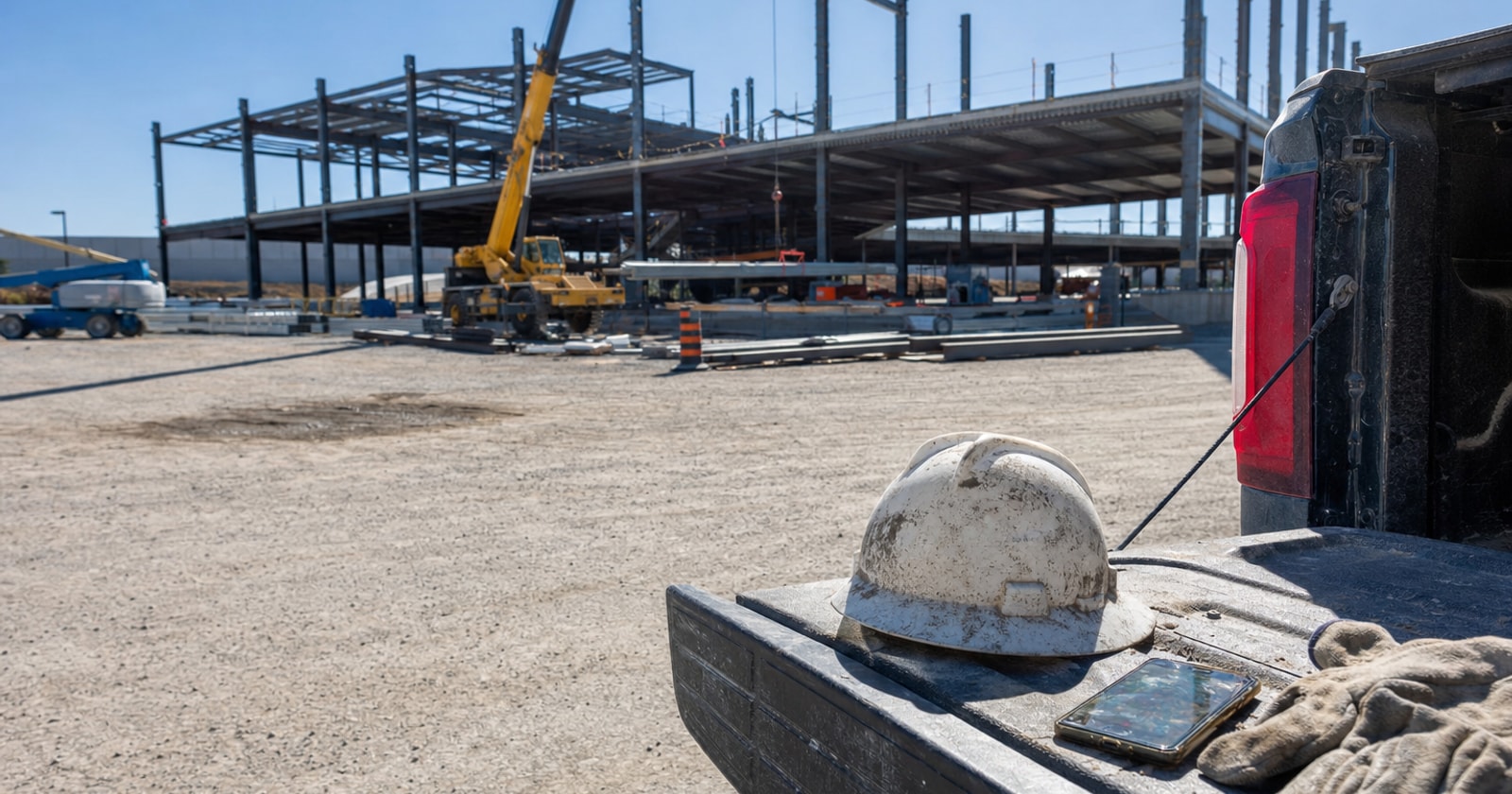
The daily report gets written at 9pm from memory, or it doesn't get written at all. Every project manager running jobs across the GTA knows this. The foreman spent the day managing a crew in Mississauga, fought the 401 to get to a service call on Yonge and Eglinton by noon, dealt with a delivery that showed up two hours late, and by the time he's home, Tuesday is a blur. Thursday's version of Tuesday, the one that actually makes it into the project file, is a reconstruction. And reconstructions get things wrong.
That gap between what happened on site and what gets documented is not a paperwork problem. It's a liability problem, a margin problem, and an inspection problem.
What's Actually at Stake When the Daily Report Is Late or Wrong
Change orders you can't defend
In Ontario, a disputed change order with no contemporaneous site record is a negotiation, not a fact. If a client questions extra work performed on a specific date, "I'm pretty sure we did that on Tuesday" is not a position. A dated daily report with crew names, work performed, and photos filed to the project that same afternoon is.
Weather and conditions you forgot to note
In a GTA winter, a crew that couldn't install exterior equipment because of a wind chill advisory has a legitimate delay to record. If nobody documented it the day it happened, that delay disappears. It doesn't disappear from the schedule or the cost, just from the record.
Inspector requests you scramble to answer
Ontario building officials and project owners ask for daily logs. If your project file contains sporadic entries reconstructed after the fact, that record doesn't hold up the way a consistently filed, timestamped log does. A complete, date stamped daily report history is the kind of thing that makes an inspection go smoothly instead of sideways.
Crew utilization you can't account for
Which crew members were on which site, on which day, doing what? If you're running a mixed service and project operation where techs split time across jobs, you need that record for accurate job costing. If the daily report for a 12 person crew gets filled in from memory two days later, the allocation is a guess.
The Real Problem: The Window Closes
The daily report is only accurate when the information is still fresh and the crew is still on site. Every hour between the end of shift and the moment someone sits down to write it, detail evaporates. Names get dropped, sequencing gets muddled, photos don't get taken because the moment has passed.
The traditional fix is to push harder on foremen: remind them, chase them, make it a policy. That works until a busy week hits, and then it doesn't. The problem isn't discipline; it's timing. Asking someone to document a workday from memory the same evening, or the next morning, or Thursday, is asking them to do something that requires more effort and produces a worse output than documenting it while standing on the job.
The document needs to be filed before the crew leaves the site. That's the only version of this workflow that works consistently.
How to Build a Same Day Daily Reporting Habit That Sticks
Whether you use a paper form, a shared doc, or field software, the structure matters as much as the timing. Here's what a complete daily report actually needs to contain:
- Date and project name (obvious, but often missing on reconstructions)
- Crew list, every person on site that day, by name
- Weather and site conditions, temperature, precipitation, anything that affected work
- Work performed, specific tasks completed, referenced to the scope or schedule where possible
- Photos, tied to the specific work performed, not a generic photo dump
- Delays or issues, equipment, delivery, access, inspection holds
- Visitor log, inspectors, owner reps, subtrades on site
That's seven fields. A foreman with a phone or a tablet can fill all seven in 10 to 15 minutes at the end of shift while the crew is packing up. That's the window.
The discipline question is simpler than most project managers think: if filling the report is easy and fast and happens at the natural end of shift moment, it becomes a habit. If it requires logging into a laptop at home, it doesn't.
How PolarPath Handles This
PolarPath's daily reports module is built for the end of shift window, specifically. A foreman opens the daily report on a tablet or phone, and the form captures crew, weather conditions, work performed, and photos. When it's submitted, it files directly to the project record, timestamped, attached to the right job.
The project manager doesn't receive an email attachment to manually organize. The record is in the project the same day it happened, with the photos connected to the work, not sitting in someone's camera roll.
For a GTA contractor running jobs in Brampton and a service route through Scarborough simultaneously, that means both sites have their own daily record filed before anyone's on the 427 heading home. The project history builds itself in real time instead of being assembled on Friday afternoon before a Monday client meeting.
PolarPath sits on the operational execution layer, working alongside QuickBooks rather than replacing it. The daily report feeds into the project record that also holds change orders, RFIs, submittals, and permit tracking, so when an Ontario building official asks for your site log, you're not compiling documents from three different places.
The Practical Takeaway
Daily reports fail when they're asked to happen after the fact. The fix isn't a new policy; it's a shorter window between the work and the record.
End of shift on site is the only moment when the crew list is right in front of you, the work is visible behind you, and the photos still make sense. Build the habit around that window, with a form that takes 15 minutes rather than 45.
If your current process has foremen reconstructing Tuesday on Thursday, that's the workflow to change. The project record is only as useful as it is accurate, and accuracy has a shelf life measured in hours.
See how it fits your shop at polarpath.ca.