
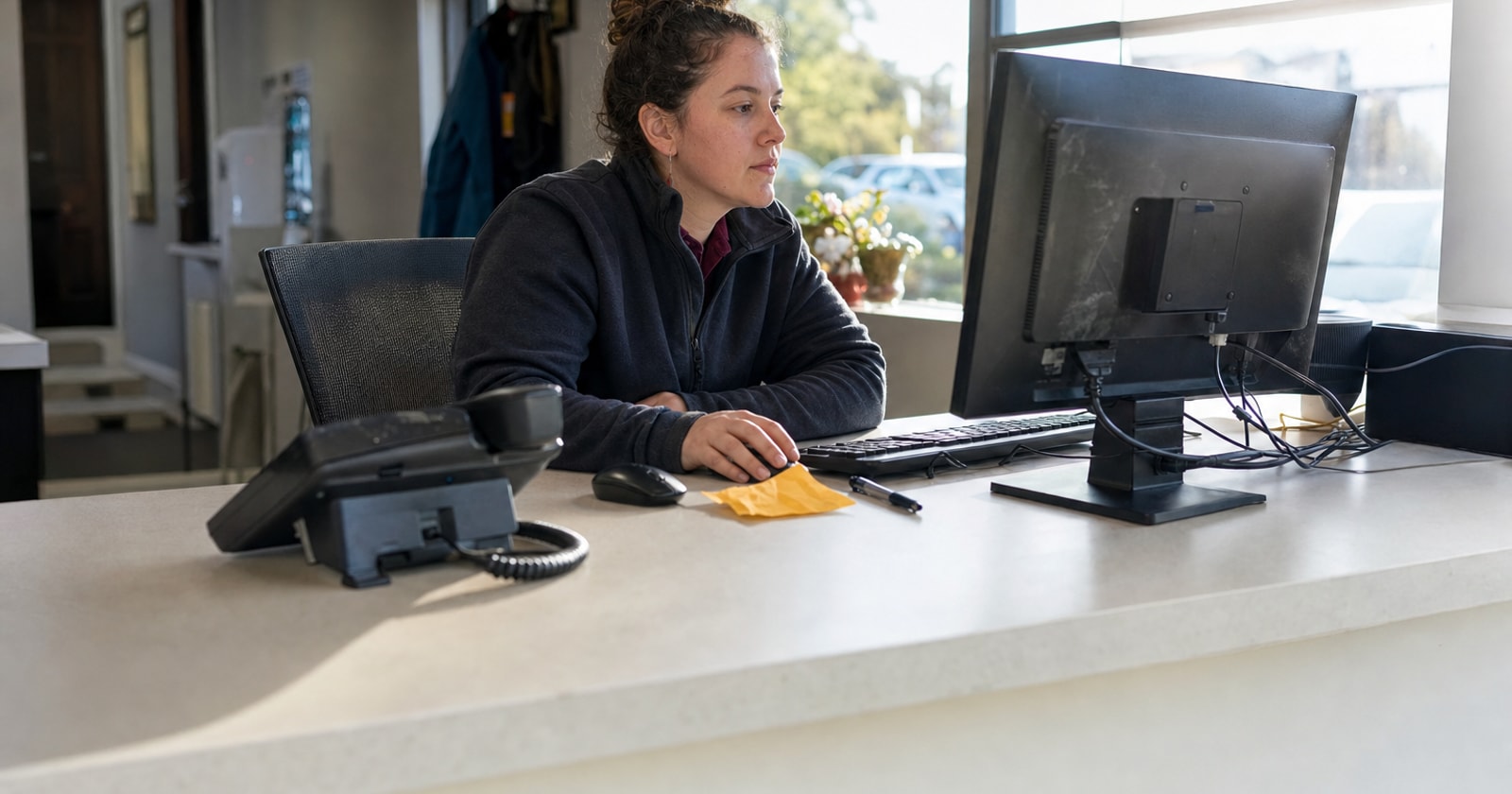
The Call That Becomes a Lost Job
A new facility manager calls your company at 7:40 p.m. on a Tuesday. She has a water line dripping into a finished ceiling and needs someone on site first thing tomorrow. Your phone rings twice and goes to voicemail. She leaves a message, waits fifteen minutes, and calls the first other company she can find online.
Your office hears the voicemail at 8:15 a.m. Wednesday. By then she has already booked someone else.
That is not a staffing failure. It is a workflow gap that shows up every time incoming volume exceeds office hours. Field service businesses lose new customer opportunities at night, on weekends, and during the mid morning stretch when dispatch and admin are both tied up.
The conventional patch is a third party answering service. They take a name and a number, send an email, and the office re enters everything anyway. The new caller still does not have a booking. The crew still gets the job details verbally the next morning.
What the PolarPath AI Receptionist Does With a New Caller
PolarPath includes an AI receptionist agent named Sarah. When a call comes in, Sarah answers it. The experience for the caller is a natural phone conversation, not a touch tone menu.
Here is where it matters that the caller is new: the agent checks the incoming number against PolarPath's existing customer records. If no match is found, Sarah does not guess or pull up the wrong account. Instead, she collects the information needed to create a fresh customer profile.
Note: this phone to dispatch workflow is currently in demo and preview. The description below reflects how the workflow operates in that demo environment.
What the agent collects from a new caller
Sarah works through a short, conversational sequence:
- Company name, "Who are you calling from?"
- Contact name, "And your name?"
- Callback number, confirmed back to the caller digit by digit.
- Service address, including suite or unit if applicable.
- Nature of the issue, in the caller's own words.
After collecting each piece, the agent reads it back to confirm it. The caller hears exactly what has been recorded. If anything is wrong, they correct it in the same call.
This confirmation step is not a courtesy extra. It is what prevents the customer profile from being created with a misspelled company name or a wrong street number, the kind of data entry errors that haunt a dispatch board for years.
What happens in PolarPath after the call
Once the details are confirmed, PolarPath creates a new customer profile automatically. The company name, contact name, phone number, and service address are stored against that profile. The agent then records the service issue and, as the work order and scheduling parts of the workflow are completed, the job flows onto the dispatch board.
Your office arrives in the morning to a booking that already exists, with a customer record already populated. No one listened to a voicemail. No one called back to gather the same information a second time. No one typed an address from a sticky note.
Why the Distinction Between New and Existing Callers Matters
It is worth being explicit about this because it affects data quality directly.
When an existing customer calls, PolarPath recognises the incoming phone number and pulls up the account. No collection step is needed because the profile already exists. The agent confirms the facility and contact details on file and moves straight to the service issue.
A new caller is a different situation. There is no existing record to pull up. If the agent assumed it knew who was calling, or if it created a duplicate profile by not checking first, the customer database would fill up with errors. PolarPath checks first, finds no match, and then collects only what is needed to create one clean, confirmed record.
One call, one profile, no duplicates.
A Practical Framework for Thinking About After Hours Intake
Whether or not you are evaluating software right now, here is how to audit your own after hours intake process:
- What percentage of your inbound calls come outside business hours? For most mixed service and project shops, it is higher than the team realizes.
- How many of those result in a confirmed booking within 24 hours? Track this for two weeks. The gap between calls received and bookings confirmed is your conversion leakage.
- How many steps does your office take to get a new caller onto the schedule? Count them: listen to voicemail, return call, collect details, enter into CRM or dispatch tool, assign technician. Each step is a hand off where information can drop.
- For new callers specifically: where does the customer profile get created? If the answer is "whenever someone has a moment", that is a data quality risk.
A realistic target for after hours intake is: one call, all required information collected and confirmed, customer record created, job on the board. Any process that requires a second call to gather the same information the caller already gave once is worth fixing.
How PolarPath Connects This to the Rest of the Operation
The AI receptionist does not exist in isolation. PolarPath spans the full chain from intake through dispatch, field execution, invoicing, and collections. When a new customer profile is created from a first phone call, it becomes the foundation for everything downstream: the work order, the technician assignment, the invoice, the payment record.
The alternative is a customer record created by whoever had a free moment, populated from memory or a voicemail transcript, and manually linked to a dispatch entry in a separate tool. That chain has three or four points where information drifts or gets dropped. The AI intake removes the first and most common one.
The Practical Takeaway
New callers are higher effort than existing ones because you have to build the record from scratch. That effort does not have to happen the morning after the call. If the information is collected, confirmed, and entered during the call itself, your office starts the day with clean data instead of a callback queue.
That is the specific problem the PolarPath AI receptionist is designed to solve. If after hours intake is a gap in your operation, it is worth seeing how the workflow fits your dispatch setup. Book a walkthrough at polarpath.ca.