
Why PolarPath's AI Receptionist Books Directly to the Dispatch Board (and Not to a Separate Inbox)
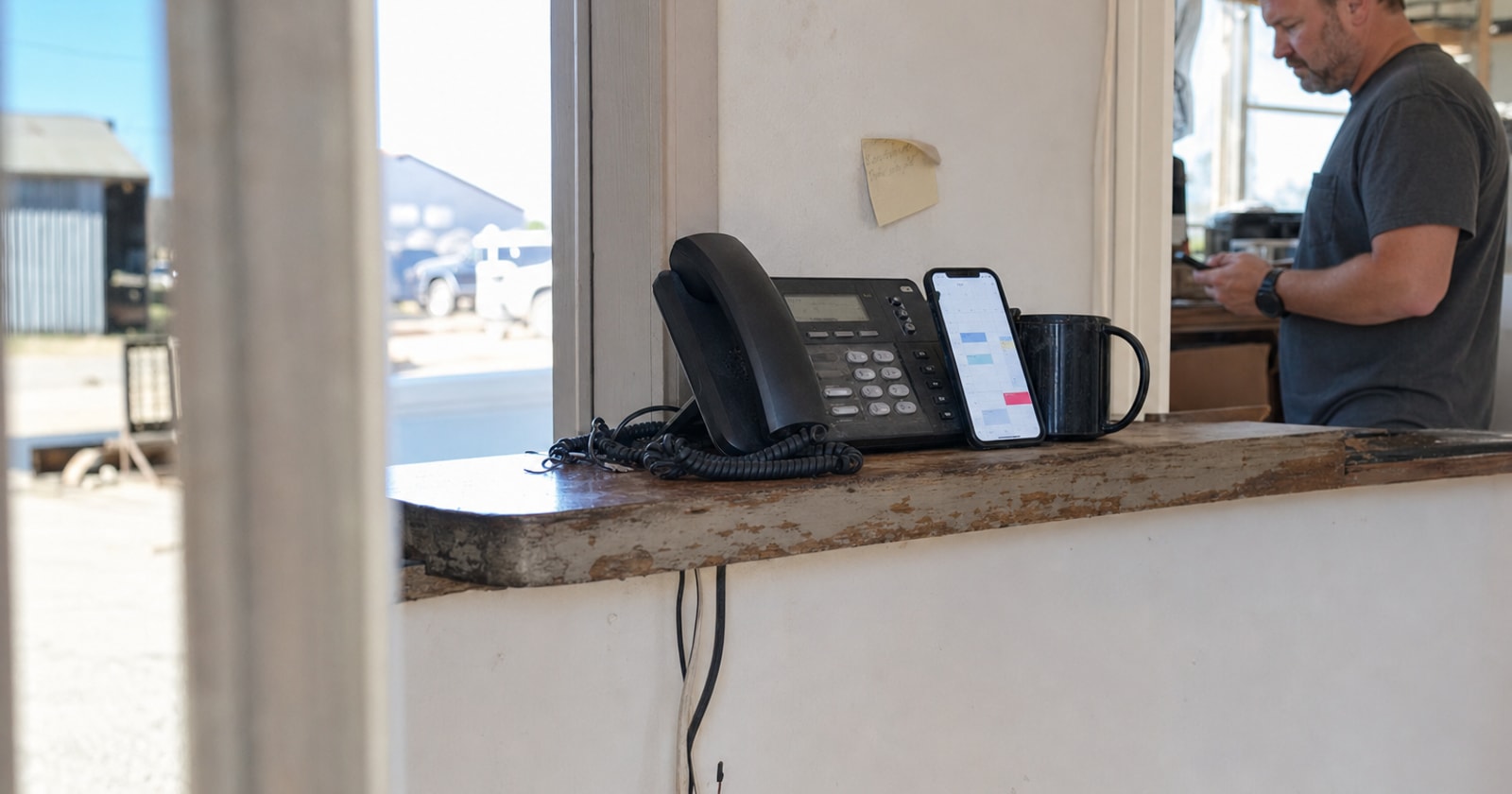
A call comes in at 9 p.m. from a homeowner with no heat. Your office is closed. The call goes to voicemail. By the time someone listens to it, calls back, and keys the job into the system the next morning, that customer may have already called someone else. The revenue didn't disappear because you lack good people. It disappeared because the handoff between "customer calls" and "job is on the board" required humans to be awake and at a desk.
That is the problem the AI revenue agents in PolarPath are designed to close. But the way we chose to close it matters more than the headline feature. This is a build note on one specific design decision and why we made it.
The Two Obvious Approaches (and Why We Rejected One)
When you start thinking about an AI receptionist for a field service business, two architectures present themselves.
Option A: The AI answers the call, collects the details, and parks the information somewhere, an inbox, a queue, a draft record, so a human can review it in the morning and then create the booking.
Option B: The AI answers the call, qualifies the job, and writes the booking directly onto the same dispatch board your crew and your office already work from.
Option A feels safer. It keeps a human in the loop before anything touches the live schedule. A lot of software takes this path because it's lower risk for the software company: nothing goes wrong with a draft record.
But for a contractor running a mixed service and project operation, Option A doesn't actually solve the problem. It just moves the voicemail. Instead of a message in a phone app, you now have a message in a queue. Someone still has to process it, make a judgement call, and manually enter the booking before the job exists in dispatch. The after hours delay is shorter, but the failure mode is the same: the job doesn't exist on the board until a person acts on it.
We built Option B. Here is what that means in practice, and what the real tradeoffs are.
What "Wired Into the Dispatch Board" Actually Means
When PolarPath's AI receptionist answers a call, it is not running as a separate system that queues records for later. It is operating with access to the same schedule your dispatch team sees during the day.
The AI collects the job details from the caller, what the problem is, the service address, the preferred timing. It checks availability against your actual schedule. It books the work. By the time the call ends, the job is already sitting on tomorrow's dispatch board.
When your office arrives in the morning, the booking is there. Not in a separate inbox. Not in an AI specific queue. On the board, the same place any other booking lives.
This matters for one specific operational reason: your dispatcher doesn't have to learn a new workflow for AI booked jobs. The job looks like a job. They can assign it, adjust it, add notes, or move it exactly the way they would any other work order.
The Tradeoff We Accepted
Writing directly to the dispatch board is not without risk. If the AI misunderstands the scope of a job or books a slot that turns out to be too tight, someone has to correct it. That's a real cost.
The alternative, drafting to a queue, trades that correction cost for a reliability cost: the job might not get processed before the customer calls a competitor. For most after hours service calls (HVAC diagnostics, electrical faults, plumbing emergencies), the speed of the booking is more commercially important than the risk of a dispatcher needing to adjust a time slot the next morning.
For genuinely complex scope, a multi day mechanical project, a job with permit dependencies, a large commercial call in, the AI receptionist is not the right path for booking details. The design acknowledges that. It is built for the common case: a qualified service call that needs to land on the schedule before the customer loses patience.
Knowing the difference matters. A contractor using this tool well will set it up for the job types where speed wins, and route complex inquiries to a callback queue by design, not by accident.
How to Think About Configuring This for Your Shop
If you're evaluating how an AI receptionist fits your operation, the honest setup question is: which of your incoming call types are standard enough that qualification and booking can happen without a human in the loop?
A practical way to work through it:
- List your three most common after hours call types. For most HVAC and electrical shops, this is no heat, no cool, and no power. These are well defined enough for AI qualification.
- Identify what information you need to create a dispatch ready work order for each type. Address, symptom, contact number, preferred time window. If those four things are enough to put the job on the board, the AI receptionist can handle it.
- Flag the call types that require a human judgement call before booking. New commercial accounts, jobs with site access requirements, calls that are likely to escalate into project scope. Route these to a callback, and be explicit about it in how you configure the system.
- Decide your fallback. Even with an AI receptionist live, a caller who can't be qualified or doesn't want to proceed should get a clear path to a callback at opening. The AI should never leave a customer in a dead end.
The goal is not to automate every call. It is to automate the calls where automation is genuinely faster and more reliable than voicemail plus a morning callback.
The Practical Takeaway
The design decision to write AI booked calls directly to the dispatch board, rather than to a separate queue, was a deliberate choice about where the real cost lives for a field service operator. A booking that needs a small edit the next morning is a recoverable situation. A qualified lead who called a competitor while your voicemail was full is not.
PolarPath's AI revenue agents (the receptionist and scheduling agents) are built on this assumption: the operational execution layer has to be continuous, including after 5 p.m. The dispatch board is not a 9 to 5 artifact. It is the live state of your business, and work should be able to land on it whenever a customer is ready to book.
If your shop is losing after hours calls to voicemail, the first question worth asking is not "should we get an AI?" It is "what does a missed call actually cost us, and is the current system set up to recover it before the customer moves on?" If the answer to that second part is no, the architecture of how you handle those calls deserves a closer look.
You can see how this fits your operation at polarpath.ca.